–
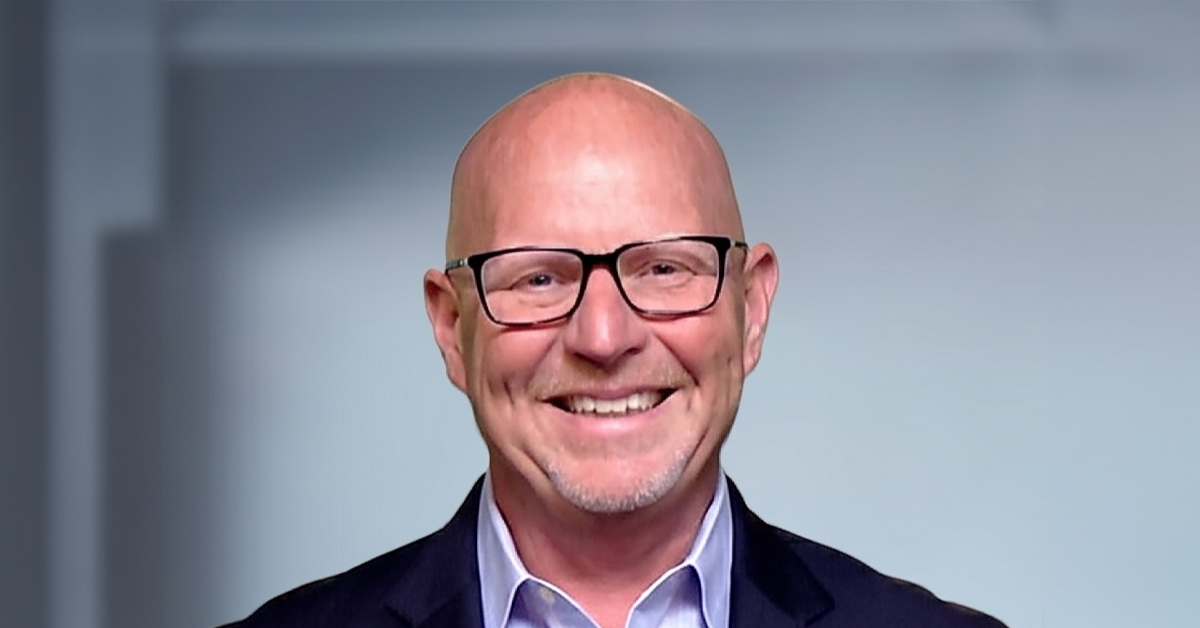
Guest: Chris Galipeau, Head Market Strategist at the Franklin Templeton Institute, where he serves as one of the firm’s foremost voices on global capital markets, economic trends, and investment strategy.
In a nutshell: Advisor and investor alike have access to more data, research, and real-time news than at any other point in history.
Which is a big reason why navigating the financial markets and maintaining client relationships have never been more difficult.
The speed of information, combined with the 24/7 media cycle, make it incredibly challenging for everyday investors to maintain perspective on their long-term interests.
Meanwhile, advisors have to battle for bandwidth against “news” and noise that are optimized for attention, not ROI.
But as AI and other technologies accelerate the info churn, your ability to help folks interpret the data that truly matters and maintain focus on their long-term goals could become a premium service.
On today’s episode, Chris Galipeau shares his philosophy for separating critical market signals from the deafening noise of the modern media landscape.
.Chris Galipeau and I discuss:
- Why having more information at our fingertips has actually made it more difficult for investors to maintain discipline and stick to a long-term plan.
- Learning to look past short-term geopolitical panic.
- What all investors can take away from quarterly earnings calls.
- The historical inverse relationship between inflation and PE.
- How AI could drive massive gains in efficiency and and productivity that lead to gains in profitability and earnings.
- Why paying too much attention to backward-looking macroeconomic data is a mistake.
- The humility required to survive on Wall Street and the danger of confusing a bull market with financial wisdom.
Chris Galipeau on the 24/7 news cycle:
“It’s a challenge for ‘professional’ investors, it’s a challenge for ‘everyday’ investors, it’s a challenge for all investors. And I think it’s more difficult now than the early ’90s or the late ’80s to stay focused on your long-term plan. To make sure that, unless something’s really changed with the objectives of your plan or the amount of risk that you’re taking, that today you can’t get whipsawed around by the news flow. And it is a challenge. The advent of social media, another substantial challenge. And I would caution everybody to be mindful of where you’re getting your information. Trust, but verify the information. I publish a lot of research, and we give our clients all of the empirical data so they can do just that if they’d like. But there’s not a day that goes by, there’s not an hour that goes by, that I see something and read something and I know immediately: that is factually incorrect.”
Chris Galipeau on the relationship between politics and the markets:
“It’s knowing what’s important and being able to separate the signal from the noise. There are two variables that really matter for the stock market. Number one is the growth of earnings over time. That is the single most important variable. Stock prices follow earnings over time, period, end of story. And then the other one is the level and direction of interest rates. Anything outside of that is really just noise.
“For example: politics. People can get heated about politics. Doesn’t matter, and I can prove that. We give our clients that data and say, ‘Hey, you really don’t need to react to this,’ assuming you’re an intermediate-to-long-term investor. And then, of course, over 35 years of being a professional investor, you build up a thick skin. You have a disciplined process, hopefully, and you have rules that you use. So you have a process that you run through every single time. You know the process works. Might not work in the week, might not work for the day, might not work in the quarter, might not work for two quarters. But you stick to that process because you know that it works over time. And that process is 98% focused on bottom-up fundamental analysis with regard to picking stocks. And you have to be aware of a host of other things too. But you need to get that right. You need to get that earnings variable right.”
Chris Galipeau on humility and looking through the windshield:
“You spend as much time doing this as I have, and others who’ve been at it for three, four decades, you go through this learning phase where you confuse your own intelligence for a bull market. 1998, ’99, 2000, I was 30, 31, 32, had all the answers. Just had to put money to work. Margin was great. Call options were great. Everything was great. Nothing could go wrong. And then you find out that what you’re really caught up in is a mania and a bubble, and you’re not nearly as smart as you thought you were. And so, you get humbled. This is the most humbling business in the world. Do I have strong conviction and strong beliefs? You bet I do. Do I hold some of them loosely? You bet I do. Because I’ve learned the hard way that I know I don’t have all the answers. I need to be aware if things are changing, and if we need to tweak the toolkit, we’ll work on tweaking the toolkit.
“Here’s what I hold loosely. Am I aware of all the macroeconomic data? I am. Do I follow all the stats and all the reports? I do. Do I really think that those matter? Some of them do. Most of them don’t. Most of it’s noise. All of it is backward-looking. I don’t get paid to look in the rearview mirror. I get paid to look through the windshield. So I think there’s a lot of folks who think that the macro stuff is the primary driver. That’s what matters. I used to think that. I know that’s not true. Do I pay attention? Yes. Are there certain macro indicators that are really important? Yes. Is it all important? No. Is most of it noise? Yes. So I’d much rather focus on the micro than the macro. I’ve learned that the hard way too. By the time the economy’s actually in a recession, the stock market knew that six months, nine months prior. The stock market leads the economy, not the other way around. The stock market leads earnings growth or earnings degradation, not the other way around. And so I don’t hold on that tight to any one data point that comes out.”
Resources Related to This Episode
- Chris Galipeau on LinkedIn
- Franklin Templeton’s Robert Crossley on How Neobrokers, Wallets, and Generational Divides Are Rewriting the Rules of Retirement Planning
- Franklin Templeton’s Sandy Kaul on Bitcoin, Stablecoins, Tokenization and the Birth of the Wallet-Based Ecosystem