
–
Sometimes you have to write the book you want to read.
As the 2008 financial crisis was beginning to drag millions of homeowners underwater, Joseph Moore took a personal finance class at his church. He realized that conventional wisdom about renting versus owning had put his family in a dangerous spot.
“We sold our house on a Saturday,” Joseph remembers. “Our neighbor put her house on the market the next Saturday. It never sold. We were the last two people off the Financial Titanic in 2008.”
Then a light went on in Joseph’s historian brain. He wasn’t the only person who followed advice like “renting is throwing away money” to poor financial decisions. But while there are countless biographies about the Rockefellers of the world, no one writes books about the folks on Main Street and the strategies that have — and haven’t — helped them build wealth throughout history.
Joseph spent the next ten years writing that book, the national bestseller How to Get Rich in American History: 300 Years of Financial Advice That Worked and Didn’t.
On today’s show, Joseph and I unpack three centuries of economic booms, busts, and shifting paradigms that have defined how Americans think about growing their money.
3 Insights from Joseph Moore
1. Your Advice Shouldn’t Be “Timeless.”
Advisors and everyday investors alike often treat money like math. It adds, it subtracts, it compounds. And since math doesn’t change, the best ways to put your money to work are timeless.
But Joseph encourages us to think back a generation or two.
“The problem with that idea is that what always worked was always changing, because the economy was always changing. Why did grandparents tell their grandkids, ‘Spend your money as fast as you can’? Because money was different. Money was self-issued. It didn’t come from the government. It came from private banks. It came from private individuals. And so very often if that individual died or left town, or that bank closed up its doors, your money went to zero. It might go up, but it could really easily go down. And so people adapted their advice to what the money did. The advice was, ‘Get this out of your hands as fast as you can. Turn it into real estate. Turn it into tools for your business. Turn it into some better money, maybe with gold behind it. But do something to get that out of your hand before the value drops.’ That’s the kind of thing that I was not expecting when I went looking for timeless financial wisdom. I really did think that I would find the thing that always worked, and what I found was that that was always changing.”
You can probably think of some counterexamples that have proven a bit more durable, like “Live within your means” or “Be careful with credit cards.” But a broader view of finance reminds us that money is always in motion. As an advisor, your job isn’t to be timeless, it’s to keep pace with the times and with the needs of your clients.
2. Concentrate, then Diversify.
A more recent “timeless” principle of wealth building is the diversified portfolio. Again, think back to a time when people worked for one company all their lives and had a substantial part of their retirement tied up in that company’s share price. No pro would advise their client to have all their eggs in one basket.
On the other hand, as Andrew Carnegie once observed, “The way to become rich is to put all your eggs in one basket and then watch that basket.”
Joseph says:
“I’ll tell you that most successful investors in history did not diversify their way to the promised land. They concentrated on a handful of strategies or investments with the potential to really pay out, and then when they won, they diversified. Somewhere in the system we have there’s an incentive to say, ‘Diversify, diversify, diversify.’ The problem with diversification is it’s great for keeping what you have, but it’s not good for getting ahead.”
If diversification is step two, then advisors are skipping over step one: coaching their clients on how to concentrate all their assets — including time, effort, passion, and creativity — on things that will help them build more wealth than they’ll get from a simple 10% annual ROI.
“Part of the concentration could be career optionality to the upside. The advisors that I remember encountering in my early days, you bring them your money and they tell you where to put it. But most of the money that you’re going to make in your life, most of the returns you’re going to make in your life, you haven’t made yet. They’re still in your career. They’re embedded in your human capital. I wonder about the degree to which financial advisors will increasingly become career advisors. ‘Take that money and invest it in the thing that will allow you to launch your career two, three, or four steps up the ladder so that you don’t increase your income by 20%, but you double or triple it.’ Because that is concentration. You are concentrating your efforts on the thing that has the biggest upside payout, and then you can diversify out of that to protect what you make.”
3. Broadcast Abundance.
If you spend enough time on social media or cable news, you will discover that Social Security is going bankrupt, buying a house is impossible, the middle class is vanishing, and the American dream is dead.
And every time you click or sit through a commercial break, you’re feeding what Joseph calls the “Despair Industrial Complex” or “Big Woe”.
Good news just isn’t profitable. Talking heads and politicians are incentivized to use their megaphones to tell us that the world is on fire and they’re the only ones who can fix things.
Joseph says, here’s the reality:
“ I could find people telling you the American dream is dead about 200 years before I can find the phrase ‘American Dream.’ In the 1670s, the colonists of Virginia burned their capital to the ground because they said nobody gets ahead anymore. That’s how angry they were about upward mobility then. And yet we look back on that time and realize people were getting ahead at historically alarming rates. In the 1800s, there were these big speeches given — ‘The rungs on the ladder to success were sawed off by the people ahead of you!’ — and yet that was literally the time with the steepest upward mobility climb for everyday people. One of the best-selling personal finance books from 1984 says that the middle class will be gone by the 1990s, and it sold almost 100,000 copies.”
Negativity isn’t new. But the fact that it’s dinging at us all day, every day, is.
When your clients call you in a panic about the latest ding, how are you cutting through that noise?
Or, better yet, how are you silencing it with your communication and meeting rhythm? Because, according to Joseph, there’s plenty of good news to share as well:
“Americans have never had less poverty than we’ve had. We’ve never had more abundance. We do have some problems. Housing is one of the big ones. They can be solved. This is not the first housing crisis, and it’s not the worst housing crisis, and there are historical solutions. I think we have to step back from the negativity and ask ourselves as individuals in that society, ‘Is it true? And are there steps I can take that actually empower me?’ You’re not going to get ahead sitting on a couch you’re paying 21% interest on watching TV tell you you can’t get ahead.”
Joseph Moore’s Warning for Advisors
This Time IS Different.
In finance, you often hear that the four most dangerous words are “This time is different.”
Joseph disagrees.
“My pushback on people who who disparage that phrase is, this time is always different. It’s about how is it different? The real lesson of history is that history is not physics. History does not exert a gravitational pull. So you look at ‘Everything reverts to the mean’ and we forget something. If you’re a historian, the mean is moving through time too. The mean is changing in every era too. And unlike physics where gravity can grab you and pull you back, history doesn’t have that pull.”
Instead, Joseph circles back to his experience with conventional wisdom and pushes back on another phrase: “This will always work.”
Will it?
Can we keep relying on the 60/40 portfolio and market tailwinds driving up AUM?
When you’re reading a book or watching a movie, things change with the turn of a page or a cut to a new scene.
Joseph argues that real change is slow. Like Theseus’ ship, pieces change over time. And while the boat might look the same, it’s not.
What worked for the Boomers for 40 years is, little by little, assumption by assumption, beginning to fail younger generations.
If advisors want to stay ahead of that curve, they need to acknowledge that this time really is different.
And instead of falling back on what’s always worked, we have to figure out what’s going to work next.
Resources Related to This Episode
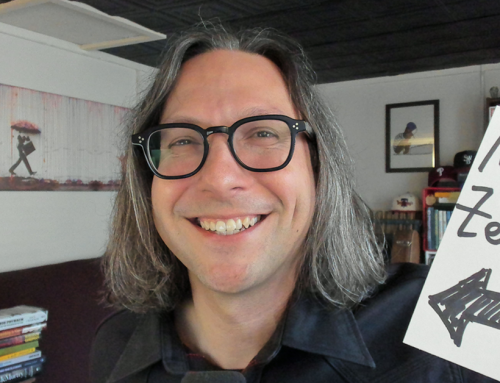
Photo by Savannah Stringer. Copyright held by Joseph Moore. This image is licensed under the Creative Commons Attribution 4.0 International License (CC BY 4.0). You are free to copy, distribute, reproduce, and adapt it, including for commercial use, provided you give appropriate credit. To view a copy of this license, visit https://creativecommons.org/