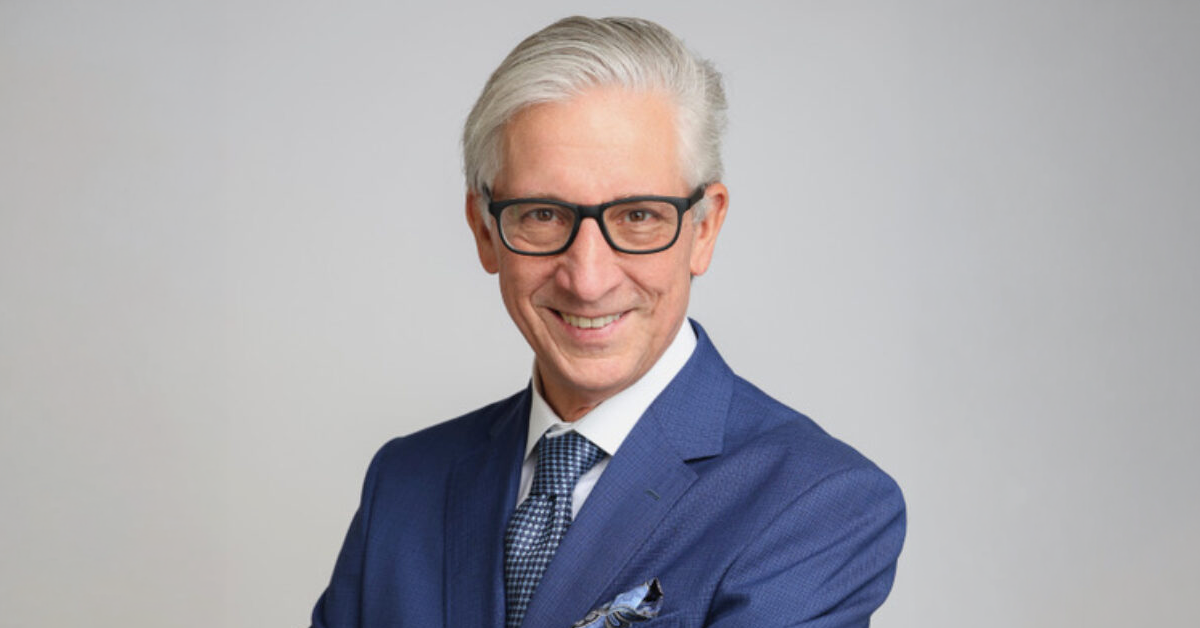
Guest: Bob Pisani, former Senior Markets Correspondent for CNBC and author of Shut Up and Keep Talking: Lessons on Life and Investing from the Floor of the New York Stock Exchange.
Markets don’t just test portfolios. They test people. And after 35 years at CNBC and nearly three decades reporting from the floor of the New York Stock Exchange, Bob Pisani has seen that truth play out in real time. He was there for the Dotcom boom and bust, 9/11, the 2008 financial crisis, COVID, ETFs, indexing … And now, some 14,000 bell rings later, the rise of AI money management and a new generation of investors whose skepticism about the markets verges on nihilism.
On today’s show, Bob Pisani explains how decades on Wall Street turned him into a firm believer in behavioral economics and the futility of short-term forecasting. We discuss why tried-and-true investing principles are so hard for the average person to follow and how financial advisors can help clients stay grounded when the headlines are screaming “Panic!”
.Bob Pisani and I discuss:
- Lessons on investing, reporting, storytelling, and living from the legendary Art Cashin.
- What sell-offs at the bottom of the 2008 global financial crisis taught Bob about behavioral investing.
- The overwhelming biases and variables that cloud forecasting on Wall Street.
- What’s in Bob’s personal portfolio and why he keeps things simple.
- Will AI destroy jobs faster than it creates them?
- How advisors can combat the rise of “financial nihilism” and why the wealth management industry must focus on expanding wealth.
- Why Bob believes financial advisors, at their best, aren’t just in the investment business. They are in the “dreams business.”
Bob Pisani on irrational investors and the limits of forecasting:
“The whole financial crisis beginning in late 2008 and into early 2009, I would say that was probably, other than 9/11, the worst that I ever saw emotionally. What I saw in the great financial crisis was my generation — I’m 70, I’m the classic baby boomer -— flushing a lot of its savings down the toilet. What really disturbed me about watching human behavior is that people don’t act rationally. Behavioral economics really is true. People don’t buy low and sell high. They do the opposite in times of panic. The S&P dropped 50% between 1997 and the bottom in March 2009. A rational person does not sell down 50% unless you believe the entire world economy is literally going into the dark ages. You buy down 50%, you don’t sell, and yet that is not what happened.
“It was shocking to me, even as I got there in the mid-1990s, that everyone was so bad at predicting the future. Wall Street analysts and strategists are terrible. The Federal Reserve has a terrible track record predicting the GDP of the United States one year out and inflation one year out. And it turns out there’s two main reasons here. There are emotional and cognitive biases that literally affect your brain and prevent you from correctly forecasting. And secondly, there’s an enormous amount of information that goes into pricing stocks. And it turns out, when you put all this together, it becomes really, really difficult, almost like forecasting the weather two weeks out. Once I finally fully understood this — and it took several years of seeing this happen, people acting irrationally — I became a lot more humble about forecasting. I put very little stock in forecasting these days.”
Bob Pisani on the long-term power of the markets:
“It’s time in the market, not timing the markets. Most of the time, the most important thing is to understand your client, understand the risk tolerance they have, and have a long-term plan. You need to explain to them the fact that the market, long term, provides consistent rewards. The trend is always up. I like to say the S&P is up 75% of the time in the last a hundred years. Active management -—attempting to buy and sell, picking stocks, and going in and out -—consistently underperforms a long-term buy-and-hold strategy. The stock market provides probably the best risk-adjusted return of any long-term investment.
“I look at my portfolio twice a year. In my book, I published what I own and you shouldn’t be surprised to hear my single biggest position is the S&P 500 ETF. To me, that’s the core of any portfolio, and people are always kind of astonished and disappointed when I say that’s my biggest single holding. They want me to say something amazing. ‘Where’s the leverage in inverse Malaysian bonds or something that nobody’s ever heard of that goes up 500% a year?’ And I say, ‘I’m sorry. I know you want to believe those things exist, but they don’t. You are under the impression there is a Wizard of Oz somewhere. He’s not there.’”
Bob Pisani on how financial advisors can battle “financial nihilism”:
“There are three things I think that are really important that financial advisors should be standing for: financial innovation, long-term investing — I call it ‘get rich slow, not get rich quick’ — and finally, efforts to expand the wealth pie. The game you and I are playing here is that prudence and patience produce an outcome, and the stock market provides generally superior risk-adjusted returns over long periods. What’s a little alarming now is there’s a lot of financial nihilism out there. There are younger investors who seem to think that traditional investing principles don’t matter. And they’re into get-rich-quick schemes. They’re into online gambling, they’re into obscure cryptos, they’re into meme stocks. They’re into putting all their money in prediction markets. The generic name of ‘financial nihilism’ is a real problem because if you don’t believe that long-term investing produces returns, or you think it’s a casino, we’re in trouble. The stock market is not a casino. It makes me nuts when people say this. The stock market is the opposite of a casino. In a casino, long term, if you keep playing, it’s designed for you to lose money. In the stock market, if you are a long-term player, you almost invariably will make money over long periods of time. It’s set up to make money. So it’s the opposite of a casino, yet everybody says it’s a casino, and it’s not. So the way you counter financial nihilism is you market trust, not distrust, and you encourage sound investing principles, and you talk about getting rich slow.”