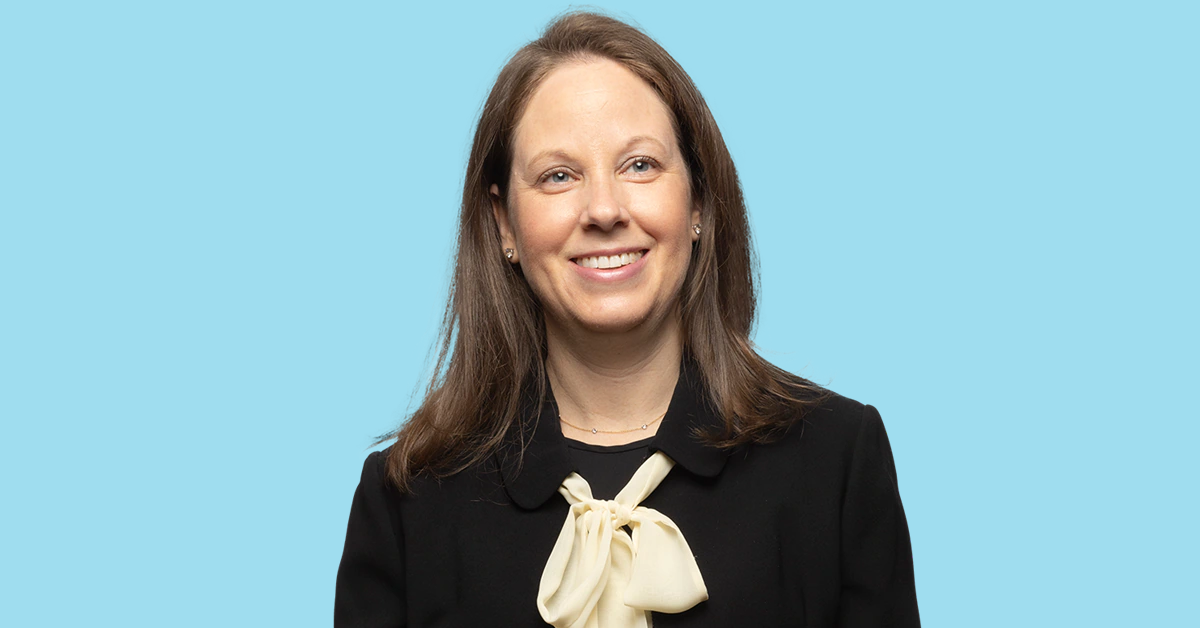
Guest: Jill Zucker, Senior Partner at McKinsey & Company. Jill works extensively with wealth management firms and writes about AI, advisor value, industry growth, women and wealth, and the future of advice.
In a nutshell: When Altruist announced Hazel in early February, financial company stocks plunged, losing roughly $20 billion in collective market value. Wall Street, it seemed, was finally asking questions that forward-thinking advisors have been asking since the release of ChatGPT:
What is a financial advisor truly worth when AI can create and explain a financial plan in seconds?
Will AI create leverage for human advisors to serve more clients in a more human way?
Or will AI trigger widespread fee compression and an industry-deflating race to the bottom?
On today’s episode, Jill Zucker shares her data-driven insights into how technology and demographics are fundamentally reshaping the wealth management landscape.
.Jill Zucker and I discuss:
- How advisors have constantly had to reinvent their value proposition in the face of technological disruption.
- Why Jill believes investors will still want human advice during emotional financial moments.
- McKinsey’s projection that the industry will face a shortage of up to 100,000 advisors by the year 2030 and my pushback on that.
- Why organic growth has become the leading KPI for private equity-backed RIAs seeking recapitalization.
- What trend lines on self-directed investors tell us about the value of person-to-person financial advice.
- Using AI to transform the client experience.
- Why the advisor of the future must possess high emotional intelligence to successfully navigate the complex intersections of life and money.
Jill Zucker on the market reaction to Hazel and the evolution of advisor value:
“I think I would try to separate out the magnitude of what happened from the signal. And I think perhaps the magnitude was overdone. But the signal, I think, is an important one to watch. If I think about the history of the wealth management space with respect to digital or online or tech-driven strategies, you think about what the early tech platforms did for the space. They basically democratized access.
“You used to have to call your financial advisor and say, ‘Where’s IBM trading right now?’ Because you didn’t know. And suddenly you had these online firms that you could then see that in real time. And so you’d say, ‘Well, what do I need an advisor for? I can get the price of my stock that I’m watching in real time on my own on the computer.’
“And the financial advisor community said, ‘Actually, what we do is we help you with asset allocation. Of course you can get the stock price. But really you need asset allocation, and that’s not happening online.’ Until, lo and behold, the robo advisor showed up and said, ‘Oh, you know that asset allocation that you are so excited to get from your financial advisor? Well, we can do that, and it’s only 25 basis points, and you’re paying 100 basis points plus.’ And so people said, ‘Oh, this is the death of the financial advisor. Robos are going to take over the world.’
“And of course, lo and behold, that didn’t happen. But the financial advisor then said, ‘It’s not about the CAPM model. You can get that online. It’s really about financial planning. And we are here to give you holistic advice, everything from tax planning to longevity planning and everything in between. And of course, asset allocation is a piece of that, but it’s really about meeting your goals and what are your goals and how are we gonna plan for that and help you with all of your financial life.’
“That’s why I talk about the magnitude versus the signal. I think people still are likely to want advice from a human. This is a scary thing and a scary moment. And yes, there’s a rational thing to do, but this is an emotional part of people’s lives, and it’s very hard to get those emotional needs met with a computer.”
Jill Zucker on the steady demand for human advice:
“We’ve been surveying 10,000 American households for a decade. We do it about every 12 to 18 months here at McKinsey & Company, and we ask, ‘What do you get from your financial advisor? What do you get from your insurance firm? What do you get from a retail bank? What’s the experience like? What do you like? What do you don’t like?’ And many things have evolved in that survey over the decade that we keep rerunning essentially the same battery of questions … Except the percentage of those Americans who we survey, affluent, high-net-worth families, who say they want to do it themselves with respect to investment management. 20% is the number of families that say, ‘I’m self-directed. I’ve got this.’
“80%, and it’s all wealth levels, from the most affluent to those with less affluence, say, ‘ I want advice from a human.’ Why do they want advice from a human? Because most people don’t want to push a button and redirect tens of thousands of dollars with one click because people are worried about, am I going to outlive my wealth? Can I afford to stay in my home? Should I fund my own long-term care policy, or should I help my child pay for their graduate school education or a wedding or their down payment on their new home? And that decision is much more than an analytical decision.”
Jill Zucker on using AI to evolve the client experience:
“I think the middle and back office efficiency gains from AI are going to ultimately become table stakes, and those who are early adopters are going to get real value. And there’s going to be surplus to be captured from being a first mover. And the laggards on that are going to really suffer, unfortunately, because they haven’t made the investments to get there. And there’s going to be fee compression on some of those middle and back office tasks that is set by the first movers. But I don’t think that’s going to be ultimately the differentiator. You’ll see a period of time where there’s a differentiator in terms of company performance. I think changing the client experience, changing the advisor experience through AI, is what is going to ultimately separate the winners from those who are the laggards. The middle and back office stuff is necessary. If you as a firm can produce a correct statement more quickly or more real time or in a different format because a client wants to see it differently, that’s all great. But that’s not really going to change the experience. What can change the experience for the client is if the advisor has sharper perspectives.”
Resources Related to This Episode
- Jill Zucker on LinkedIn
- The looming advisor shortage in US wealth management (McKinsey & Company)