
–
To borrow a phrase from recent podcast guest Alan Smith, financial advisors are facing “a Spotify moment.”
Just as streaming upended the traditional music business of selling records and put a premium on the live concert experience, AI is commoditizing traditional money management and raising the value of …
Well, what exactly?
What is the financial advisor’s equivalent of a live concert? What is that high-end experience that your prospects and clients will want to keep paying for? And how can you reframe your business around that experience so that it’s replicable and scalable?
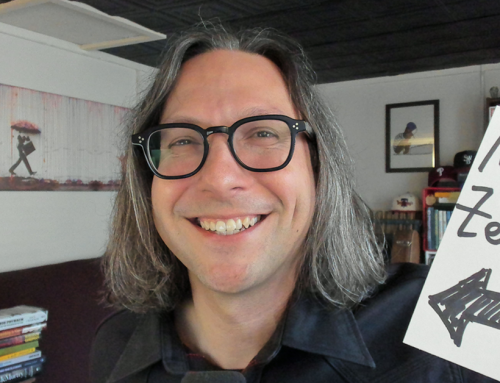
On today’s show, I’m joined by Duncan MacPherson, the CEO of Pareto Systems. We discuss why Duncan firmly believes that the next five to ten years will be the absolute best time in history to be a financial advisor — as long as you’re willing to adapt and evolve.
3 Insights from Duncan MacPherson
1. Develop Your Advisory IP.
In the days before portfolio management apps and cable news, having professional financial knowledge was often enough to build trust and grow a thriving practice.
Then the internet happened. Suddenly, everyone had access to the same numbers, the same trends, the same global news. Being “knowledgeable” became table stakes.
So advisors repositioned themselves as “experts,” the people who could translate the data into actionable plans for building wealth.
And now, AI has happened. Duncan McPherson believes that it’s time for advisors to make another shift.
“This was brought to life especially in the last five years: from knowledge to expertise to intellectual property. This is where you start to get everything out of your head. You get it formally professionalized, standardized, optimized digitally, physically, and you start to position this so that clients actually don’t just trust you in terms of your qualities as a person. They start to really trust your practice and the client experience it provides and your process. This is incredible. This drives enterprise value. This drives bandwidth and scale to ensure plateau avoidance, and it’s incredibly fulfilling.
“To reverse engineer that, I ask advisors, ‘What is it that a client can only get from you? Is it your technical ability, your core competency, the way you manage money?’ No. They can get that elsewhere. With AI, that’s going to become even more commoditized. What they can only get from you is your client experience, the way you conduct yourself, how they feel about belonging to your community and your process that puts every piece of the financial puzzle together for them as their life unfolds and their needs evolve. So the enlightened advisor is starting to understand that practice management and relationship management are just as important as asset management.”
Developing your own IP isn’t just about branding or messaging. Duncan encourages advisors to start by systemizing everything they do to establish a uniform philosophy, workplace culture, and client experience. This is one of those areas where utilizing AI can enhance your firm’s human touch rather than threaten it, automating processes so that you can humanize the exceptions:
“ You start to get it all out of your head based on the Rule of Three. The Rule of Three says anything you do three or more times, with three or more steps, has to be documented. Now you’ve got an entire fit process built out. Then you can build out a service model. Then you can build out a goals-based relationship management protocol. When an advisor embraces technology and then thinks in terms of the ‘hand in glove,’ meaning, ‘Okay, it’s going to liberate me to level up,’ they put so much distance between themselves and everybody who’s just sort of either treading water or just plugging along. This is next level.”
2. Soften Your “Clay.”
It’s possible that the 60/40 portfolio is becoming an antique, especially if you’re working with ultra-high-net worth families. Folks who don’t just want to pad their brokerage accounts and 401(k)s are looking at real estate, private equity, gold, international markets, and digital assets as ways to increase their diversification and hedge against inflation.
Advisors who are dead set on their tried-and-true investment theses risk losing credibility — and that aura of expertise — if their clients can get a broader perspective on bitcoin from ChatGPT. Duncan believes it’s essential that advisors be willing to step out of their comfort zones, keep learning, and meet their clients where their questions are.
“As a financial advisor, the clay is soft. Not getting bogged down in confirmation bias, but just looking around. If clients are starting to ask about it, read the room. Make your clients the voice. Be open. Directionally, where is this going? The writing’s on the wall. There will always be bonds and stocks and private credit and all kinds of things to invest in, but your role as a fiduciary is going to expand.”
You do not have to become a crypto true believer to answer questions about crypto. But Duncan says you do need to accept that massive change is coming — in finance, in tech, in the rest of the world — and reposition your value prop.
“You start thinking about blockchain, quantum, and other technologies converging. I think it’s non-optional that we have to be serious students about this. The middleman is under siege. The conduit between the buyer and the seller, that’s going to be reimagined completely, and the advisor has to figure out, ‘How can I level up?’ And part of that is, what is it about your value that clients can still hold in their hands? Going from vapor to paper, having physical things that speak to your intellectual property. Intellectual property that is physical, not just digital. When the client’s alone with his thoughts and they’re thinking about their advisor, what comes to mind? ‘Oh, I trust him. He’s a good guy. He’s smart. He’s professional.’ Or do I start to think with more depth and breadth around your value? ‘You’ve got a great process. You gave me a personal financial organizer that has everything. It’s the keystone, everything’s contained and easy. I can show it to my wife. I can show it to my brother.’ This is where it’s going to get very, very exciting. Henry Ford said, ‘If I gave people what they wanted, I would’ve given them a faster horse.’ You have to find this balance between what a client tells you they want and anticipating what they’re going to want as their life unfolds and progresses. That’s leadership, that’s fiduciary, that’s the advisor of the future. The clay has to be soft.”
3. Grow Down
Leveraging AI and systematizing your processes can help advisors find the sweet spot between the science (money management) and the art (life-money coaching) of what they do best.
But that doesn’t necessarily make managing a growing business easier.
Duncan and I have both talked to advisors who are feeling overwhelmed by the challenges and changes that are facing the industry today. Managing AI integrations. Planning for family successions as older clients retire or pass on. The struggle to maintain visibility in a competitive market place where everyone has a short attention span.
Duncan believes that this trajectory is a direct symptom of measuring success strictly by sheer size rather than by strategic focus and qualitative depth. Instead of allowing a sprawling client roster to drag you down, purposefully “grow down” to reclaim your operational bandwidth, balance, and joy.
“Some advisors who are getting a little bit bogged down with the minutia, some of the hassle factors, and the things that they don’t like to do. And some advisors, getting bogged down has actually prompted them to start thinking about winding down because they’ve lost their spark and some of their passion because of all the firefighting and some of the nonsense. So if you think of the progression — bog down, wind down — I say, let’s start thinking about growing down, where you can start to simplify your life based on the number of relationships you manage, so you can grow up market. You can level up how you’re perceived and described by the right people, who you’re really suited for, and level up around being strategic, around blind spots and where this is going to rejuvenate your passion. That’s one of the most fulfilling things I’ve seen is the metamorphosis of an advisor who is kind of declining, circling the drain, and they’re restored because of focusing on what they really enjoy doing. That’s very exciting to me.”
Duncan’s observation dovetails with something that I talked about with John Scianna, the Founder of Objective Brand: focusing on psychographics versus demographics when targeting your ideal clients.
Do you really like working with a specific niche, like local dentists? Or do those folks have something else in common?
Maybe what you really enjoy is helping young professionals who are highly motivated and have a high earning potential reach that potential.
Maybe it’s not specifically medical pros you’re good with, but small business owners in general who need to build their wealth without traditional employer match-benefits.
If you focus on those broader demographics, you might be able to cast a wider prospect net and that lets you be more selective about who you decide to work with.
And then let AI handle the rest.
Duncan MacPherson’s Warning for Advisors
It’s Not Numbers. It’s Impact.
But … Isn’t the whole point of AI to automate, optimize, scale how many clients you can serve, and see how big you can get?
For some advisors, maybe.
But if your goal is to become a better advisor who’s going to keep succeeding no matter how smart AI gets, families served and AUM aren’t your only measures of success.
In fact Duncan believes that the real “ah-ha” moment for many advisors comes when they stop asking “How big can I get?” and start asking “How small can I stay?” and “What kind of an impact do I want to have on my clients?” That’s the breakthrough that could lead to the next great evolution in who you advise and how you advise them.
“It’s more important to reach people who count than it is to count the number of people you’re reaching. It feels great to have that kind of reach, but cause and effect, what kind of actual impact is that having on your business and your value proposition, how you’re perceived, your branding strategy around narrow casting? Remove the mystery. Demystify for the world who your ideal client is. You’ve gotta stop talking about clients in generalities. You have to be a broken record articulating your value around who that client is. This will become part of your value prop.”
Resources Related to This Episode
- Duncan MacPherson on LinkedIn
- Seven Pillars, One Process Duncan’s guide to reframing your relationship with your clients.