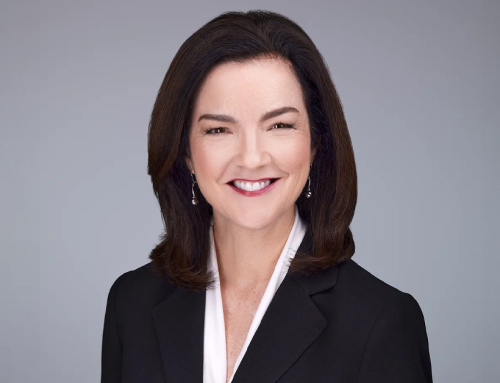

Guest: Liz Ann Sonders, Chief Investment Strategist at Schwab Center for Financial Research.
In a nutshell: From the mid-1960s through the mid-1990s, inflation, volatility, shorter economic cycles, and heightened geopolitical instability were norms for both the news and markets. Are we returning to what my guest today calls a “Temperamental Era” of uncertainty and massive change? And how should advisors prepare to help their clients maintain perspective on the differences between gambling with their money and investing for the future?
On today’s show, Liz Ann Sonders explores the forces redefining the investment landscape, from the rapid pace of technological advancement and looming changes at the Fed to ongoing war in the Middle East. Liz Ann also explains why inflation is the single most important indicator advisors should be watching today.
.Liz Ann Sonders and I discuss:
- How the speed of information and pandemic-era retail traders have drastically shortened time horizons, blurring the lines between investing and betting.
- Why the rise of AI isn’t the Dotcom Bubble 2.0.
- How pandemic-era stimulus broke traditional leading economic indicators, leading to sector-specific rolling recessions.
- The risks that come from the top 10% of households driving the bulk of consumer spending and how a traditional bear market could severely impact consumption.
- Why fears of a U.S. default or a global buyer’s strike on treasuries are overblown … but massive government debt could constrain long-term economic growth.
- The end of “The Great Moderation” and how inflation and volatility could upend the traditional 60/40 portfolio.
- How the Federal Reserve has shifted post-Greenspan to a broader, more transparent committee with diverse perspectives.
- What’s fueling gold’s recent run?
- Why markets outside of the U.S. have outperformed the S&P 500 at times over the last two years and the geopolitical risks threatening that trend
Liz Ann Sonders on how the information boom has changed investing:
“I’m not so sure it’s harder to be an investor. I think it might be harder to be a trader in the current environment, but I would distinguish between those two. And I think that distinction is particularly important in this day and age because there are some new cohorts that have really become dominant players in the market, not least being what are generically called ‘retail traders.’ Which is distinct from individual investors, that cohort that skews younger, skews male, born out of the pandemic, became active participants in the market alongside the increase in popularity of sports betting and gambling. And I think that probably now more than ever is an important time to distinguish between investing, which is about ‘owning,’ and gambling, which is about ‘hoping.’”
Liz Ann Sonders on Dotcom vs. AI:
“ I think the internet represented the democratization of knowledge. AI, I think, represents the democratization of intelligence. I also think that an important difference between the late 1990s as it relates to the build out of the internet, and the capital spending associated with it, and the bubble that ultimately burst in spectacular fashion, is it was a little bit more of a ‘build it and they will come’ environment from a telecom infrastructure perspective. There were assumptions made about the demand to come. I think what’s different this time is we’re much closer to an even balance between demand and the spending. So the massive CapEx spending is tied to the growth in demand, not pie-in-the-sky assumptions of that demand coming eventually. Not to mention the fact that a lot of the best-performing stocks in the late 1990s were not profitable companies. And we were doing silly things like valuing based on eyeballs or population. Clearly, we’re talking about a much healthier set of companies here representing the major players that have huge profits and they have strong balance sheets and they’ve had really strong cash flows.
“Now, the one thing to be mindful of at this stage is that, two years ago, free cashflow growth for the Mag 7 was growing more than 60% year over year. And for that group now, free cashflow growth is in slight negative territory. There’s more debt being used. So that is a little bit of a warning to just do a lot of company-level research and don’t think monolithically. Don’t think or invest based on just cohorts.”
Liz Ann Sonders on the end of the Great Moderation and what could be coming next:
“ It clearly was a period of disinflation, save for the pop in inflation that we saw in 2008. As a result, it was a very benign inflation backdrop. We had massive globalization kick in. China joining the WTO flooded the world with cheap and abundant access to labor and manufactured goods that led to much less economic volatility, less inflation volatility, less monetary policy uncertainty, longer cycles, fewer recessions, and longer expansion periods. I think most of those ships have sailed, and I think we’re really at a point where the market is figuring out whether what we’re transitioning into looks more like the 30 years prior to the Great Moderation period, which I’ve been calling the Temperamental Era.’
“So from the mid-1960s to the mid-1990s, that was an era marked by much more inflation volatility, more equity market volatility, more monetary policy uncertainty, more geopolitical uncertainty, shorter cycles, meaning more frequent recessions. But the expansion periods were more robust on the upside. And the most important distinction between those two periods that’s relevant to investors is that for almost the entire 30-year period of the Temperamental Era, bond yields and stock prices moved inverse to one another because bond yields were generally keying off what was happening in inflation. So higher bond yields typically meant inflation was rearing its ugly head again, negative for the equity market. Fast-forward to the Great Moderation era, with the exception of 2008, bond yields and stock prices moved in the same direction because bond yields, for the most part, were keying off the growth side of the equation, not the inflation side of the equation. So higher bond yields reflecting higher growth without the attendant concern about inflation. That’s nirvana for the equity markets. Now, of course, when yields and stock prices are moving in the same direction, it means stock prices and bond prices are moving in the opposite direction. Classic 60/40, easy to get basic diversification. If, indeed, we’re transitioning to something that looks a little more like the mid-1960s to the mid-1990s, that simplistic diversification story gets called into question. ”