
–
Organic growth has been stalling for years. AI is compressing basic money management into a commodity. And in this uncertain economic environment, where even the reliability of the 60/40 portfolio is in flux, advisors can’t just count on long bull runs to keep their bottom lines up and their clients happy.
To blast off this plateau, advisors must fundamentally rethink how they train their teams, whom they target as clients, and how they actually deliver advice.
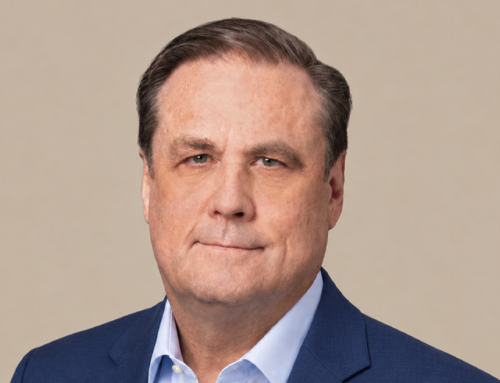
On today’s show, I talk to Jamie Hopkins, CEO of Bryn Mawr Trust Advisors LLC and Chief Wealth Officer of Bryn Mawr Trust, about how advisors should be adjusting to the realities of this new era. We discus why the “apprenticeship” model of training young advisors is driving away top talent, why business exit planning will be the single greatest organic growth engine over the next 15 years, and why the ultimate metric of a successful financial plan is the client’s happiness.
We also discuss Jamie’s new book, Your Retirement Sketchbook, and how visual planning tools can help you clarify your process and your value to clients.
3 Insights from Jamie Hopkins
1. New Advisors Need More “At-Bats.”
Historically, the financial advice profession operated on a rigid apprenticeship model. A new hire would spend their first three to five years grinding away in the back office, taking notes, running basic analyses, and observing the lead advisor before ever being allowed to meaningfully interact with a client.
Jamie argues that this model is no longer viable. For one, AI is taking over the “grunt work” that used to keep junior advisors busy. More importantly, the next generation of talent is too impatient to sit the bench for years. If you don’t give them real responsibilities early on, they will find someone else who will.
“When I was in the legal field, I started on a Monday, and I actually ended up helping with a negotiation on Thursday. I planned to just sit there and take notes in the middle of it. Everybody else was too involved with the details and nobody was really listening. The only one listening and taking notes was me. I wrote it down, gave it to the person next to me, and we brought it up and that’s what they landed on. And so I helped land a negotiation four days in because I was too dumb not to know that I shouldn’t just float this out there. But that’s the experience that young people want. They don’t want to sit behind a lead advisor for five years. Those people are going to leave. And I keep telling advisors, if you think you’re going to develop this talent for five years and then put them on a pathway, well that’s why everybody’s jumping around because we’re not letting them go out and have at-bats early on.
“I think that’s going to be a huge change. We’re not going to have this other work to do. AI’s going to do it. So we’re going to have to be prepared to bring in new people and have them ready to meet clients almost as they hit the ground. Which is a great thing that the CFP® programs now have brought to the university level. They’re getting some background technical knowledge. But that communication skill, that networking, that building a relationship, we’re going to have to deliver that at speed very quickly, right off the bat in the future, because those other roles, they’re going to be gone. We’re not going to be able to say, ‘We’re going to take two years,’ because there’ll be nobody there.”
Whether you’re sticking to “pods,” or “diamonds,” or “hub and spoke” models, the specific shape is less important than the opportunities you’re providing at every point. The sooner you integrate junior advisors into live client engagements, the sooner they’re going to strengthen the “soft skills” your firm needs to build lasting relationships.
2. Exit Planning Is the Biggest Organic Growth Opportunity of the Next Decade.
Most advisory firms are only growing at the rate of their local economy. In part, that’s because most folks who want to work with a financial pro think they already have one — whether it’s a dedicated fiduciary, the guy managing their company’s 401(k), or Betterment. Convincing someone to open their first brokerage account just isn’t a viable first step in your business model anymore. And basic wealth management will soon be AI’s job.
If you want to accelerate organic growth, you have to move your services further down the line, to where massive amounts of established wealth is already changing hands. Estate planning for retiring baby boomers is one intersection. But, more specifically, Jamie Hopkins believes private business exit planning is the real potential gold mine. Millions of older business owners hold the vast majority of their net worth in their private companies, and a historic wave of transactions is already underway. The critical mistake most advisors make is showing up at the moment of sale.
“In business, you want to be as close to where money changes hands as possible. And so, as an advisor, to be able to help on the business exit planning components of that and get in there fifteen, ten, or five years before these transactions are occurring, I think that is the sweet spot of growth for the next fifteen years from an organic client perspective. There are huge misses, and you see it all the time. They’re selling and they’re getting a great check, but they did nothing in the last five or ten years to reduce the taxes and complexity of the business. Sometimes you look at these things and you’re like, ‘You probably left $20 million on the table in taxes that just five years ago you should have started planning for.’ Because when that firm comes in with the check and says, ‘We want to buy you and we want to close in 60 days,’ and it’s like they won the lottery, there’s really not much planning that can be done anymore. It has sailed at that point. You have a valuation, it’s on the table, and all those different techniques are going out the window.“
If you’re thinking that managing a business exit might stretch beyond your firm’s current capabilities, well, that’s why many of the top firms are expanding their offerings to include things like tax planning and legal services. The folks who need financial services the most also tend to have the most complex needs. And, increasingly, they’re going to prefer a “one-stop shop” to coordinating several professionals who work under different roofs.
3. Make Retirement Visual.
Jamie believes that finance has a communication problem. Everyday investors just aren’t wired to absorb dense spreadsheets and Monte Carlo simulations. It’s even harder for folks to look at those kinds of reports and see where you, the advisor, is adding value.
In Your Retirement Sketchbook, Jamie is moving financial advice away from data and towards a much more visual experience that invites the client to collaborate in the planning process.
“The book is really about challenging advisors to bring visualizations into their financial planning and retirement planning. We are terrible at that as an industry. We show Monte Carlo analysis and probability-based results and spreadsheets about average historical returns, and people can’t learn that way. The vast majority of the population does not understand concepts in that manner. So we are really challenging people to say, teach clients the way that we actually want to learn, which is through visualizations, and that actually builds a better client experience. There’s a lot of research out there on using visualizations from a teaching and from a sales perspective. We used to call them pencil sketches or pencil sales — you’d write it on the notepad, you slide it across, the client would write something back, and that actually welcomes a client into the conversation and makes them feel part of the ownership of that plan versus these financial planning printouts on screens. There’s no collaboration there from a client perspective.”
Jamie Hopkins’ Warning for Advisors
AI Will Always Lie.
AI may be advancing more rapidly than any technology in history, but implementation can only grow as fast as we trust AI with more sophisticated tasks.
Jamie thinks that financial professionals should be more worried about how that “speed of trust” accelerates on the client side than they are about how many advisors AI upgrades could replace.
“I think one of our biggest challenges coming with AI is the fact that the models that we have built, the assumption is that no matter how good they get, they will always lie to us and they will make up information. Because the way that these were built is they are guessing and it’s never going to change from that. People lie too, so it’s not a reason not to use AI. People aren’t perfect. AI is not going to be perfect. But I think a big value of a trusted advisor is going to be helping clients discern what’s real and what’s not real. When we’re seeing videos of AI-generated people that look believable, we’re going to need people that know particular spaces that can come in and be that discerner of truth and be that communicator to clients. And I think that’s one of the true values that we are going to play as trusted professionals into the future.”
With that warning comes an opportunity: be that discerning, trust worthy truth-teller, and folks will want to sit down with you.
“I believe that AI is going to push us to go back to more in-person meetings. I talk to advisors and in the last six months they’re feeling that more people want to meet. They want to have lunch, dinner, coffee. What that means though, is the backend has to scale because otherwise we’re going to be back out and about. Not like the last five years behind a screen doing seventeen reviews in one day. We’re going to be back to doing six because we’re going to have to drive around and go to places. The trust factor of being across from somebody, I think that’s going to be important. And if you have money, you’re going to have time to spend in person with somebody. That is going to be that differentiator of people with wealth and people without wealth.“
It won’t be long before AI can handle all of the calculations.
Are you ready to manage the human connections that drive your real value?