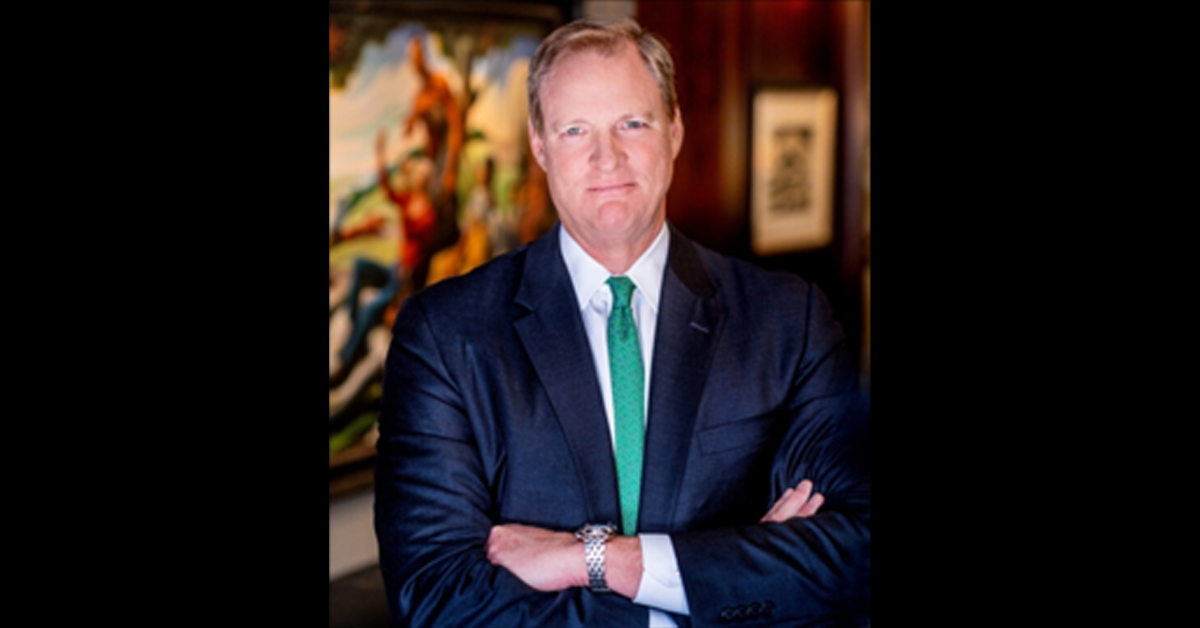
Guest: Tom Freeman, Founder of FCS Private Wealth Management and FCS Family Office, a 20-person team managing approximately $3 billion in assets.
In a nutshell: Advising ultra-high-net-worth clients requires far more than just investment expertise. It requires judgment, discretion, and the ability to navigate the complexities of family, purpose, and financial responsibility that come with significant wealth.
On today’s episode, Tom Freeman shares his unique journey from the football field at Notre Dame to high finance. We discuss what legendary coach Lou Holtz taught him about work ethic, mental toughness, and competitiveness, and how those qualities prepared him to win with some of the most successful and affluent families in America.
.Tom Freeman and I discuss:
- Tom’s transition from football to Merrill Lynch to UBS Family Office Solutions to founding his own independent firm.
- How Tom uses Steve Jobs’ “air of indifference” to project confidence and expertise to ultra-high-net-worth families.
- The 48-task “service menu” Tom’s family office offers to prospects and clients.
- Why helping wealthy families achieve harmony is more important than managing investment returns.
- How much do children need to know about their parents’ wealth and when do they need to know it?
- Taking a strategic, long-game approach to prospecting ultra-high-net-worth clients via socializing and relationship-building.
- Using AI to create more frictionless service without creating hassles for older clients.
Tom Freeman on learning how to excel from Lou Holtz and Steve Jobs:
“Lou Holtz had a saying that ‘You have to go through fire to make steel.’ And so that was a big part of his motivation. It’s really the old school, break you down and see how you react. He used to say, ‘Players who don’t react the way that I want, I don’t want playing for me.’ Some people would curl up in a ball and some people would work harder. And so I worked harder. I came out of that knowing that the harder you work, the more successful you are going to be. There was nothing that was going to stop me. That allowed me to dream big.
“Now, when I go in and sit in front of a billionaire prospective client, I am able to go in with an ‘air of indifference,’ which is what Steve Jobs called it. If it works out, great, and if it doesn’t, that’s great too. I think that gives you confidence, and I think people sense that. But it all stems from that one lesson the coach taught: if you work hard, you can accomplish anything you want.”
Tom Freeman on the ROI of family harmony:
“My favorite question in the first meeting is, ‘What’s the purpose of your wealth?’ And inevitably, it is some form of family harmony. I have had people where they don’t have family harmony, and they say they would give it all back if they could have it. Inevitably, if you have a child disengage and they don’t show up for family events anymore, the parents are beside themselves. It doesn’t matter the amount of money; all the money in the world cannot fix the fact that they cannot get their children to engage with them. So, family harmony is usually number one. And I know that coming in. By default, I’ve become a conflict resolution consultant. I know where my expertise ends and when to bring in a real pro. But it’s very important for me to know how these things occur and to try to mitigate it so when it starts going down a certain path, I can recognize it immediately and I can try to change the direction of where that’s going.”
Tom Freeman on the three biggest service needs of the ultra-wealthy:
“The first is safe, secure cash flow so you can pay your bills and live the lifestyle you want. Every time we meet with a client or make a proposal, it starts with making sure they have safe, secure cash flow. Whatever surplus you have, you invest. Investing is the easiest part for me because it is quantitative.
“Next is tax minimization. I like to say that people have lost more money to poor tax planning than they have ever lost in the stock market. That is a big deal for these clients. They pay a lot of taxes. We have a tax concierge who collects all the K-1s, charitable receipts, tracks quarterly payments, and goes through the returns to make sure the tax preparer is taking advantage of everything. We inevitably save them more money in taxes than they ever pay us in fees.
“The last one is governance. Governance is all about not letting your wealth become a burden. It comes back to those 48 tasks. If you were Warren Buffet, I’d say, ‘Okay, Warren, let’s go through each one of these. What do you want to have happen? Is this being addressed? Are you happy how it’s addressed? Do we need to pick up the ball for you on this?’ And we go through all 48. He will say, ‘I need help with this.’ Through my Rolodex, I will find an expert in that. And the client won’t even know about it. We’ll engage them if we have to, but they just know it’s getting done for them. So I know setting up that service menu will hit them all. And we can take care of them for you.”