
–
Are you sure?
And, perhaps more importantly, are your clients?
In an increasingly polarized world, folks are becoming more and more dug-in about what they believe to be true. But an “either/or” mentality can lock out important data when we’re weighing complex, real-life challenges. And when we value being “right” above all else, we may fail to recognize that not every challenge is a problem we can solve.
Often, what we’re really confronting are polarities: a pair of opposing, interdependent values, wants, or priorities that are in a constant tug-of-war for our attention and resources.
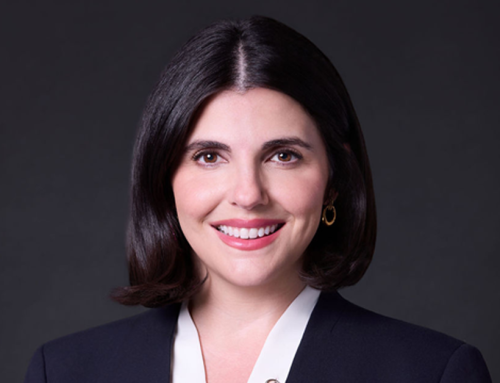
On today’s show, I talk to Kelly Lewis, the Founder of the Lewis Leadership Group and the co-author of Navigating Polarities: Using Both/And Thinking to Lead Transformation. Kelly explains why recognizing the difference between a problem to be solved and a polarity to be navigated is key to expanding a leader’s capacity for complexity. We unpack the mechanics of “both/and” thinking and explore how understanding these dynamics can help leaders avoid the whiplash of pendulum swings and leverage the upside of opposing forces.
3 Insights from Kelly Lewis
1. Differentiate Between a Problem and a Polarity.
The foundational principle of Kelly’s work is that leaders have to accurately diagnose the nature of a situation they are facing. Unfortunately, our biological operating system is programmed for simple solutions: fight or flight, fix the broken part, move forward not backward.
As Kelly explains, this hardwiring causes us to treat every challenge as a problem, which, in turn, leads us to simple and often inadequate solutions:
“How do I navigate situations in which there are two interdependent pairs of values that need each other over time to thrive or be successful? Most of us, myself included, had a lot of great training on how to solve binary problems where there was a solution and I could find the solution and I could go after the solution, check the box, and move on. And many of us didn’t have as much experience navigating these things that are just inherent in systems in us, in relationships, that are unsolvable. And instead, we have to learn how to be with this tension that, when we’re best at them, the tension is creative and it allows for possibility.”
In business, “either/or” problem solving can create rigidity where flexibility might be more beneficial.
For example:
Save or invest?
Centralize or decentralize?
Hire more human talent or develop AI agents?
Digital marketing or in-person prospecting events?
Return to office or work from home?
Maybe some companies find clear “either/or” solutions to these “problems.”
But the most dynamic firms — the ones that will continue to adapt in this rapidly changing world — are making subtle adjustments between these kinds of polarities.
AI might be the most critical polarity right now. Instead of worrying about the “problem” of AI replacing advisors, firms should be balancing the poles by upgrading their human talent while also giving them AI tools that will free them to deliver more human-to-human value.
2. Avoid Overuse.
Of course, even if we accept that some problems are really polarities, we’re still going to gravitate towards our preferred poles. We saw that with the backlash against WFH, where some companies and CEOs clearly preferred having their teams under one roof. And we’re seeing it now with AI, where struggling firms that need to cut overhead are hiring more AI agents than people.
Kelly uses the example of the age-old struggle between organizational structure and flexibility to illustrate the dangers of leaning too far into one pole:
“Both poles are neutral. ‘Structure’ and ‘flexibility,’ in and of themselves are neutral. And we get a lot of good things when we are able to focus on structure and we get a lot of great things when we are able to focus on flexibility. And when we treat them as an either/or proposition and we overfocus on one and neglect the other, that’s when polarization steeps in. That’s when we end up getting what we call ‘overuses,’ and then those overuses start to creep up, and all of a sudden, ‘Well, we don’t want this. This is really problematic.’ So we shoot to the other pole. ‘Well, the answer is flexibility.’ And then we get some goodness for a little bit. And then all of a sudden we start to get the overuses and, ‘Oh no, the answer is structure.’ So we oscillate back and forth. And with a sense-making tool or a way to take what sometimes we are ‘subject’ to and make it an ‘object,’ it can support people in being more aware of how they live with these things and how they work with these things that we call ‘polarities.'”
I sometimes see this dynamic play out with RIA CEOs I coach who struggle with short-term execution versus long-term planning. If your preferred pole is your daily to-do list, you’ll eventually crash into the downside of stagnation because what you’re doing today isn’t advancing your firm towards long-term goals.
The reaction? Swinging to the other end of the polarity. But the CEO who’s working for the billion-dollar firm in his head might struggle to keep the electricity on and retain talent.
Somewhere in between is that stable middle ground where you can keep two ideas in your head at the same time without bouncing from one extreme to the other.
3. Integrate.
So how do you find that stable middle? How do you navigate polarities without feeling like you’re on a seesaw?
Some leaders use what Kelly calls a “contingent strategy,” assessing what a particular situation needs and gravitating towards the “appropriate” pole. That can work in the moment. But it can also cause distrust and unease if your team doesn’t know which “you” is going to show up the next time there’s a crisis.
“Separation strategy” keeps both poles separate and orients most decisions around a preferred pole. This raises the risks of overuse.
Kelly believes a third way, integration, can be the most powerful strategy. But it’s also the most challenging and requires the most commitment.
“It starts with our being. It starts with the mindset that we approach something with. It starts with, can I let both of these two values rest in my heart? If I can’t, I’m likely going to shoot out and go to the place that feels comfortable. And so, as we start to just let them both have a space there, we can start to imagine, what would my mindset be if I both could spend and save? If I can hold both of those, I’m a ‘steward.’ I’m not a ‘spender.’ And I’m not a ‘saver.’ Bring them both together. But it’s a practice. There’s not a like a magic button.
“What we’ll give people advice on is, make up new words, because oftentimes the words don’t exist. If I walked into a meeting with my financial advisor and I was thinking to myself, ‘What would be a word that we could make up that would be spend and save? Spaver.’ So, if I walked into the meeting and said, ‘How can I be a spaver in the midst of this conversation? What might be available to me that I could do that would be different than if I walked in saying, really I’m a spender, but Steve is trying to make me a saver?’ and then I get resentful because you’re making me do something that I don’t want to do. It’s a mindset, it’s an orientation. What’s the easiest way for me to have access to that new mindset? Sometimes it’s, make up a new word. Sometimes it’s a visual or a metaphor that just lets you consider before you head into the conversation, before you head into the room, how can I show up in a way that is inclusive of both and neglects neither?“
Kelly Lewis’ Warning for Advisors
Part of Your Job Is “Not Knowing”
Again … are you sure?
Because if you’re not, then you might be misdiagnosing the challenge at hand, just as your clients might be misdiagnosing a normal dip in the markets or your value compared to the value of that new low-fee investing app.
In these uncertain times, answers are especially appealing. But they can also be fool’s gold.
Once you open your eyes to the polarities in your work and in your life, you’re going to see that “one-and-done” decisions often break more than they fix. That’s why Kelly believes leaders need to have more to offer than “answers”:
“Compassion, curiosity, and our common humanity are so essential right now. Those qualities that are part of us, they’re just oftentimes covered up. They’re really important as we navigate some of the most unchartered territories, at least in my lifetime, that we’ve been through. To think that we’re going to be able to navigate unchartered territory with a mindset of certainty is just really limiting. and it almost seems silly to think that.
“And so one of the questions I often ask myself and I’ll ask my leaders is, ‘What percentage of your role do you think is not knowing?’ And they’ll be like, ‘A hundred percent of my role is I’m supposed to know everything.’ When they really settle into it, ‘Probably 50% of my job needs to be not knowing.’ Because when I’m not, the only way we’re in growth and in expansion, being able to learn new things and see new ways of going about old challenges that have been around for centuries is with a beginner’s mindset. Is with the embrace of not knowing. And so I would say it’s a time that we need to embrace our not knowing as much as we find safety and security in our knowing and be really compassionate with ourselves and curious with ourselves. And be compassionate and curious with each other as we move forward. As much as we want to assume security in hunkering down, for us individually or for my family or for my country, there’s this polarity of ‘part and whole.’ And the theory is that the parts have to take care of the whole and the whole has to take care of the parts. And if either of those are not true. over time, the entire system will collapse. And it’s one of those moments when it’s easy to just focus on the parts and not take care of the whole. And I think the whole would tell us that we need to take care of the whole and the parts. “
Accept that you can’t solve everything and you’ll be ready to manage anything.