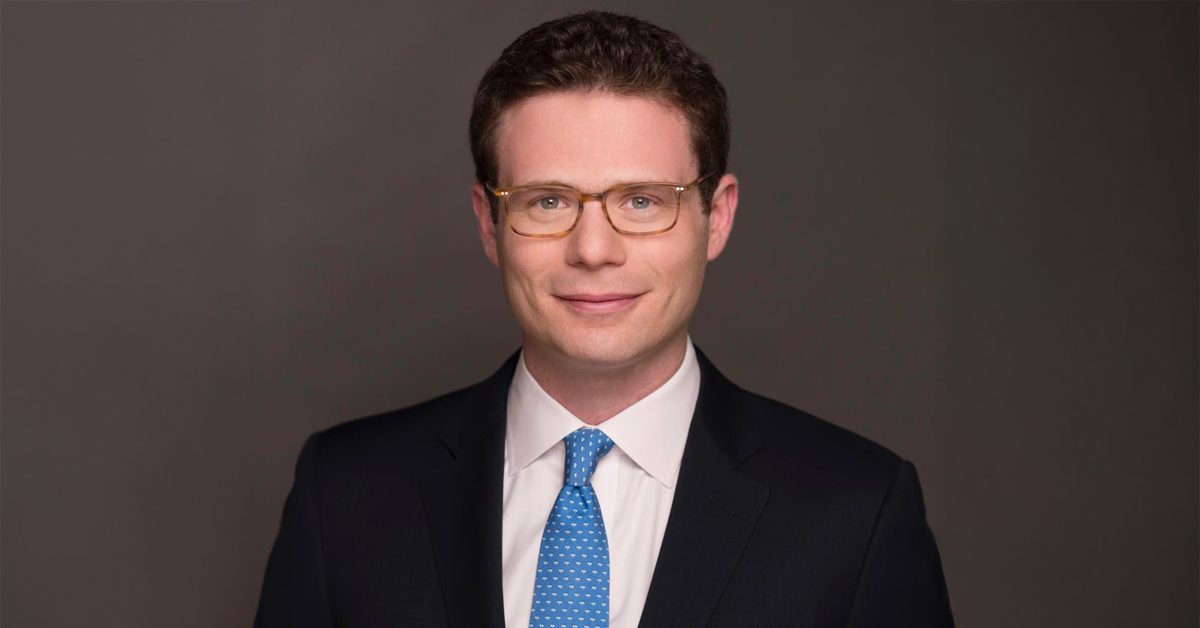
Guest: Edward Fishman, Senior Research Scholar in the Faculty of International and Public Affairs; Adjunct Professor of International and Public Affairs at Columbia University. Edward is the author of a new book called Chokepoints: American Power in the Age of Economic Warfare.
In a nutshell: What if the most powerful weapon of the 21st century isn’t a missile, but a few entries in a computer?
On the first episode of The Geopolitical Edge miniseries, Robert Kaplan reminded us that understanding the past is what gives us a chance to see the future more clearly.
And on today’s show, Edward Fishman connects the dots between Richard Nixon’s shock decision to abandon the gold standard in 1971 to today’s age of sanctions, export controls, tech wars, and digital currencies. If you are advising clients with global exposure, supply chain risk, or dollar-based portfolios, this conversation is your blueprint for spotting how economic statecraft often moves markets before headlines do.
.Edward Fishman and I discuss:
- Key economic “chokepoints” in our world today and which countries control them.
- How Nixon’s decision to abandon the gold standard transformed the global economy and what new transformations could be happening today.
- The “economic arms race” that could lead countries to de-dollarization via cryptocurrency, stablecoins, tokenization, and alternative investments.
- Why economic security, economic interdependence, and geopolitical competition cannot all exist simultaneously.
- How deglobalization could accelerate the rise in autarky around the world.
- Are the markets underestimating the economic risks of this geopolitical moment?
- Key metrics that advisors should be monitoring if they want to gain a “geopolitical edge” in their advice and services.
. Quotes:
Edward Fishman on chokepoints and economic warfare:
“ Historically speaking, ‘chokepoints’ are geographic features like the Strait of Hormuz, which has been in the news in recent months because 20% of global oil flows go through a narrow strait. And throughout history, controlling these geographic chokepoints has given countries and empires really immense power to modulate the flow of trade that goes through them. What happened in the wake of hyper globalization, when countries like China, Russia, and the former Soviet states entered the global economy, into the dollar-based financial system, into global supply chains, we saw the creation of what I call ‘invisible chokepoints,’ like the dollar-based financial system, which are parts of the global economy where one country has a dominant position and there are few, if any, substitutes. And so when you think about something like the dollar or advanced semiconductor technology, where the U.S. government really can control other countries’ access to it, we actually have similar economic power that empires of old had by controlling geographic chokepoints, just by controlling these key elements of the globalized economy. And it’s what’s given the U.S. government, in particular, really significant power to impose really devastating economic harm on foreign countries. What I would note, though, is that other countries do control some chokepoints. China, as we’ve seen in recent months with rare earth minerals, also has this power. But really, in recent years, it has been the U.S. that has really pioneered this new style of economic warfare.”
Edward Fishman on how the U.S. can continue to weaponize chokepoints:
“ You oftentimes hear people say that, as we move everything to the blockchain, or as we move off the dollar to a multipolar currency order — which I think is very possible — that U.S. sanctions are going to lose their bite or lose their efficacy. What I would say is, yes, the current model for U.S. sanctions, which is threatening to cut off foreign actors from the dollar-based system as a source of leverage, perhaps that will lose its efficacy. But just as certain chokepoints may lose potency over time, others will emerge. That’s just what happens, and it’s actually not typically the U.S. government that creates chokepoints. It’s the private sector that does, and then it’s the U.S. government that claims authority over them and basically regulates who can and cannot access them. And so my own bet is that economic warfare is going to continue to grow exponentially, just as it has in the last 20, 25 years, but we may just find other chokepoints to weaponize.”
Edward Fishman on threats to the “exorbitant privilege” of the dollar:
“We have just assumed that there’s effectively unlimited demand for U.S. debt. That the U.S. government, no matter how much debt it issues, can still issue it no matter what the interest rate is, and someone’s going to buy it. What we’ve seen in the last few months, as there have been signs of de-dollarization, moving toward currencies like the Euro, gold, potentially the RMB, is that interest rates have gone up. And it could be that the U.S. dollar just winds up being like any other foreign currency or any other form of sovereign debt, where investors are going to look at what yield they’re getting, and that will have ultimately the effect of pushing up American interest rates over time.
“The other thing to note is that if we do not actually get our fiscal house in order — which it doesn’t seem like we’re anywhere close to doing — are investors just going to balk about lending money to the U.S. government? And at that point you could get a significant restructuring where you have much less spending in the U.S. or much higher taxation. So I do think that these are black swan events, nothing that you necessarily see coming. But I do think if the dollar loses that exorbitant privilege and the U.S. becomes just like any other country in the financial system, we will feel it as everyday Americans as well as if you’re allocating assets.”