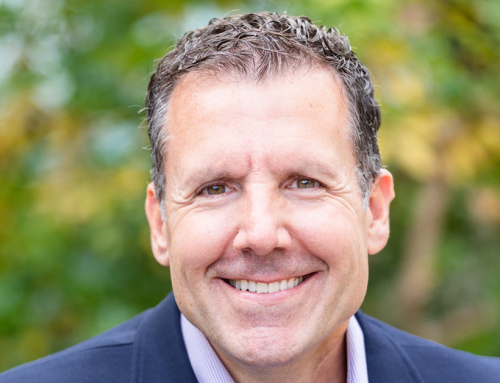

Guest: Michael Nathanson, the CEO of Focus Financial Partners. At Focus, Michael is leading a bold transformation from an aggregator of firms into a unified fiduciary advice enterprise with global ambition.
In a nutshell: Many founder/CEOs just don’t want to let go. But building a sustainable wealth management enterprise requires delegating control, embracing interdependence, and designing a firm that can outlast any one individual
On today’s show, Michael Nathanson shares what it takes to transition from a practice to an enterprise and how leaders can build enduring firms by distributing power instead of hoarding it.
.Michael Nathanson and I discuss:
- Why vision, mission, and values are critical for centering an organization around a shared purpose.
- Creating a “vivid vision” for your company’s future.
- Evolving from a practice, to cross-advisor collaboration, to a business, to a sustainable enterprise.
- Solving the “leadership paradox” by ceding control in order to grow the business.
- Michael’s three strategic imperatives for guiding Focus’ long-term strategy.
- Why “interdependence” is going to define success for wealth management firms going forward.
- How private equity is catalyzing our industry’s maturation.
- Just how dramatic will the AI revolution really be?
- Balancing organic and inorganic growth.
Michael Nathanson on “focusing” on and managing a core vision:
“We brought a core group of people together from across Focus and the vision we came up with is, ‘To be the leading fiduciary advice company in the world. A company whose clients experience it as a company built just for them. And whose advisors and advisory teams experience us as a company that offers them every resource and every capability that only the largest financial institutions in the world could offer.’
“I do think that much of that can be measured. We look at client satisfaction surveys, advisor surveys, advisor satisfaction, net promoter scores. But we can also look at statistics like growth. We can look at client retention. And we should look at these things. We should look at the overall health of the organization with respect to being the leading fiduciary advice company in the world. I think it goes far beyond size and we’re already there and I’m not prepared to declare that we’ve already achieved our vision — though I do believe that we’re well on our way.”
Michael Nathanson on the biggest challenge facing RIA leaders:
“Being able to cede some control is the big challenge of our industry. Our industry is full of people who love clients. The RIA industry came about in large part as a reaction to the suitability standard. Ultimately, we all in the RIA space are fiduciaries at heart. We all want to do what’s right for clients. But when we really think about that, how far are you willing to go for your clients? If that means you giving up some control so that you can surround yourself with other people that can do even more and better, can you make yourself a little bit less indispensable for the benefit of your clients? Can you bring other people that add capabilities and talent that you don’t currently have or that you don’t have the capacity for? I think that ultimately we become more powerful as advisors as we give up control. I’ve referred to this as a ‘leadership paradox.’ I feel like in my own career, the more I’ve given up by way of control, the better I’ve become at what I do. And I think it’s the same for advisors generally. I think that the more we learn to rely on other people, the more we learn to let other people complement our skills and supplement our skills, the better we do and the more evolved we become.”
Michael Nathanson on “PQ” leadership:
“I used to think that being a leader meant you had to be super smart, and it was a lot about IQ, and being firm, and making really strong decisive moves, and having everyone confident that you’re the right person and you’ve got all the answers. And as I’ve gotten older, I realize that it’s not just IQ, it’s EQ, but it’s also what I call PQ, ‘positivity quotient.’ Being able to not only emote and have empathy, but also being able to be positive even when times are dark and still be a source of inspiration and optimism. And I think there’s also extreme power in being able to change your mind. I think that people get far too locked into their decisions and feel like they’re in a trap now. You can’t reverse, even though that was not the right decision. But the ability to change your mind is a powerful ability that very few people have.”
Resources Related to This Episode
- Michael Nathanson on LinkedIn
- How to Be a Real Leader That Gets Results In our first conversation, Michael Nathanson explained why he considers himself a CIO: Chief Inspiration Officer.