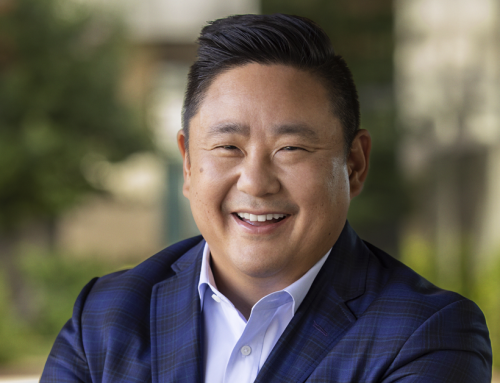

Guest: Robert D. Kaplan, the bestselling author of 23 books on foreign affairs, including his latest, Waste Land: A World in Permanent Crisis. Robert holds a chair in geopolitics at the Foreign Policy Research Institute. For three decades, he reported on foreign affairs for The Atlantic. He was a member of the Pentagon’s Defense Policy Board and the U.S. Navy’s Executive Panel. Foreign Policy Magazine twice named him one of the world’s top 100 global thinkers.
In a nutshell: August, 1982 began what is arguably the greatest bull market of all time, and almost every advisor working today has only known the favorable winds that have been in place since the 1980s. In the past four decades:
- The United States has been the great power.
- The inflation of the 1970s gave way to massive disinflation that led to near zero interest rates and soaring stock markets.
- The globalization of the economy kept inflation low.
- Technology advancement has led to a rising standard of living.
- The spending boom and then the retirement wave of the baby boomers kept the economy humming.
- And the United States has kept the world order in check.
It’s been a glorious period to be an investor, but as we all know, not everybody benefited from this growth.
As a result, the United States in particular and the world in general are experiencing massive change.
So my question is, what if we are entering a new era?
One where the assumptions that carried us through the past 40 years of globalization, relative stability, and the U.S.-led world order no longer hold.
What if the forces shaping markets today, such as fragmenting supply chains, economic statecraft, rising nationalism, political polarization, cultural wars, and great power rivalry, aren’t just temporary disruptions but signals of a more profound structural shift?
My new podcast series, The Geopolitical Edge, will explore how the assumptions that shaped the last 40 years of world history and economic growth could be changing.
And on my first episode, Robert D. Kaplan provides the context and the historical perspective you need so you can connect the dots about what’s happening–and make informed decisions about how to proceed.
.Robert D. Kaplan and I discuss:
- The relevance of geopolitics to financial returns and how the markets are learning to “price in” current conflicts.
- Why Robert is most concerned about potential escalation between the United States and China in the Western Pacific and the power of “mutually assured financial destruction.”
- How to use “nonlinear thinking” to identify events that could change the world rather than just continue existing trends.
- How social media has eroded centrism and moderation.
- Why “order” is more important than “freedom” to maintaining peace, prosperity, and stability.
- The end of the age of empires and the beginning of great power conflicts.
- Why “constructive pessimism” may be more useful than optimism.
. Quotes:
Robert D. Kaplan on the U.S. and China:
“ I think that the market nervousness about, for instance, the Israel-Iran War, is a buying opportunity. Many geopolitical events have been very impressively priced in by world markets. The war in Ukraine, the war in Gaza — they’re interesting to debate about and people get very emotional about them, but they don’t affect your retirement statements very much.
“But the one big exception to this rule is any military conflict in the Western Pacific. If you had a high-end conflict between the world’s two largest economies, China and the United States, in the South China Sea or Taiwan, where the world’s greatest sea lines of communication are, where supply chains are most crucial for the world, and where, in Taiwan, all the semiconductors are produced, it could be devastating for world markets. That would be an event that would register dramatically in people’s 401(k) retirement statements, and then we would be in a different world.
“What keeps the peace in the Western Pacific, ironically, is the very fear of China and the United States of such an effect on world financial markets. So it keeps the peace in a way that the fear of atomic bombs kept the peace in Europe throughout the Cold War. I would say that the possibility of an actual high-end war between the U.S. and China in the Western Pacific is about one-in-20, but that’s high actually. It should be one-in-40 or one-in-70 when you think about it. So it’s something to keep your eye on. But again, I will emphasize it’s the very fear of this happening that ironically keeps the peace.”
Robert D. Kaplan on how freedom can lead to chaos:
“ Even if you’re living in a democracy, order is more important than freedom, because without order, there is no freedom for anybody. The overwhelming majority of Americans have never experienced real disorder. The words ‘anarchy’ and ‘chaos’ are thrown around quite a bit, but they’ve cheapened the words. I’ve experienced anarchy and chaos in Sub-Saharan Africa, in Iraq, when people are not sure about where they’re gonna get their next meal, where there are no police on the street, and the governments do not control any territory outside of a few hundred yards from the capitol. That’s real chaos and that really exists.
“And the founders of the American Revolution considered this. They understood that it wasn’t a democracy they wanted, but a republic that divided up power between executive, legislative and judicial branches, because they knew that just a pure democracy where there were opinion polls all the time, and elections all the time, was a recipe for chaos. And we have a little of that now. The end of the ‘smoke-filled rooms,’ the primary system, brought us away from being a republic to being more of a pure democracy, which the founders were afraid of because to them, democracy tempted anarchy. They wanted a mixed system, a mixed regime of both elites governing and people who had a chance to change the elites once every four years or so. When you widen the aperture and you look at the downfall of age-old empires after World War I, and the rise of mass democracies, which led to fascism in Central and Eastern Europe, our world today is less and less stable, it’s less and less predictable. And so we face a paradox: the freer we are, the more unstable we are, essentially. And the founders would be tearing their hair out about opinion polls, about tweets and all of these things. This was what terrified them.”
Robert D. Kaplan on “constructive pessimism”:
“I think pessimism saves more lives than optimism. Pessimism would not have led us to believe we could change Iraq into a democracy. Pessimism would’ve allowed us to build up our forces far earlier before World War II. I call it ‘constructive pessimism’ or ‘anxious foresight.’ Remember, in our lives, we often worry all the time about things that could go wrong, but the things we worry about often turn out okay because we’ve worried about it. We’ve taken steps to avoid it. Some things we can avoid, but a lot of things we can’t, so what tends to go wrong in our lives are things we never thought about. Geopolitics is similar.”
Resources Related to This Episode
- Books by Robert D. Kaplan
- 4 Ways to Learn Faster Than the World is Changing Financial planner, author, podcast host, and speaker Taylor Schulte on why all financial advisors need to be lifelong learners.