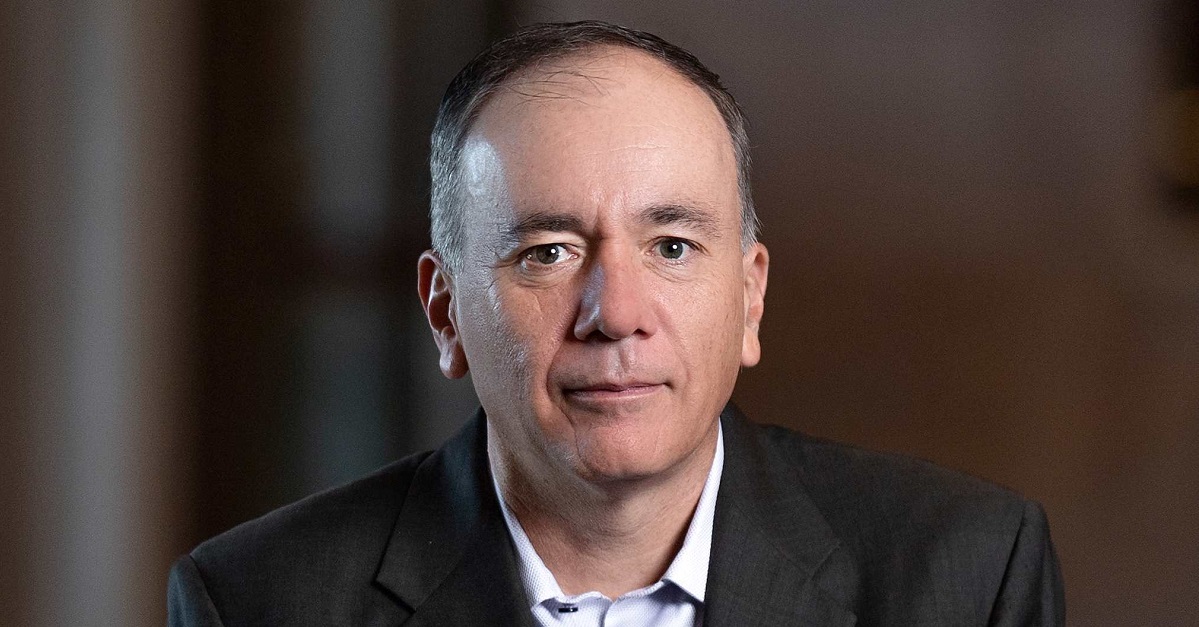
Guest: John Furey, the founder and managing partner of Advisor Growth Strategies, a leading consulting and M&A advisory firm serving the RIA industry.
In a nutshell: Building a brand that truly reflects your firm’s vision, values, and capabilities is one of the hardest things a business leader can do. It’s also one of the most important. As your company evolves, the way you present yourself to clients, prospects, and talent has to evolve as well. But leaders also have to follow what their data is telling them to strengthen their positioning in their marketplace and make sure investments in branding pay off in a tangible way.
On today’s show, John Furey discusses how to elevate rebranding from a tactical exercise to a strategic asset and how he emerged from the process with a powerful new story to tell about his firm.
.John Furey and I discuss:
- The reasons behind John’s recent rebrand and signs that your firm might need a refresh as well.
- Using branding to connect vision, strategy, and culture.
- The data John analyzed to identify where his old brand was falling short and measure the ROI of rebranding.
- Why rebranding should not be an in-house, DIY initiative.
- Action steps for activating your new brand.
- What rebranding taught John about leadership, growth, and client experience.
- Why consistency might be the new authenticity.
- Lessons from branding expert David Aaker and his 20 Principles That Drive Success.
John Furey on what prompted his rebrand:
“ We felt strongly that our existing brand, which was still a great brand, wasn’t reflecting our capabilities in the present day and how we wanted our ideal client to think about us going forward. So we had a hypothesis that it needed to be updated. And what we wound up doing before we did the rebrand is we made a wise investment and did research. We asked our clients, prospects, and even prospects that did not hire us, a lot of things: what they thought of the firm, where they thought we added value, where we’re good, and maybe where we’re not so good.
“What we heard that, for me as a founder, rang some alarms was that the business is still maybe too concentrated with John Furey and his partner, Brandon Kawal. ‘They have an emerging young team. Maybe they need more senior people on the team.’ So that informs now our future hiring. And then the other piece was that our M&A capabilities were viewed as not well known. And that hurt a little bit, but part of it was our ethos as a firm is to not shine the light on our work, but shine the light on our client’s outcome. But from a branding perspective, it actually hurt us because the industry’s telling us, ‘You’re just not known for that. You’re known for your management consulting work.'”
John Furey on the biggest RIA branding blind spot:
“Virtually every firm in our ecosystem, other than large aggregators, large PE-backed firms, woefully underinvest in their brand. You could look at a firm that has $10 million in revenue and they might spend $40,000 on their brand every year. I think there’s willful underinvestment. And if you don’t believe me, you could look at other cohorts in other industries. I’m not saying RIAs should go out and do a million-dollar rebrand, but there needs to be more thought, more conviction around it. So that I think is step one, the case for reinvestment that has to be done.
“And then once you commit to it, then it’s how do we get smart and allocate these resources? I think the starting point is to consider what is our value proposition to the ultimate consumer: the investor client, and even a little bit broadly our team and future team members, and also our community that we live in and and help. Once you think through that, who do we want to be when we grow up, or how do we want to modernize this? I think you come up with tenants of where the brand would ideally like to go. And then maybe interact with a branding team and professionals and say, ‘We went through an exercise to think through what our brand maybe could be,’ and then share it. And then I think you’re in a spot to maybe engage an agency to help you. You should not try rebranding alone. It’s not a do-it-yourself exercise.”
John Furey on rolling out his rebrand:
“At the beginning, not everybody was on board. It was like 50/50. And then they said, ‘All right, John, you’re the visionary, you want to do it, let’s go for it.’ But what we did along the way, when we did the market research, our research agency interviewed the team and spent time with them. We got their feedback, which helped inform the brand. And then when we started doing the initial sketches of where we’re going to take the brand, we trial ballooned with the team and we asked them for feedback. So we tried to bring them along the journey versus John Furey and my partner just figuring it out with a brand agency and then telling everyone what we’re going to do.
“And then on the training front, it’s new. We still have work to do there, but we spend time with the team walking through, ‘Here are the changes, here is why we did it, here’s the new positioning.’ We actually have a positioning platform that we use, so that’s how we’re rolling it out. But we’re a small business, so our training is more on-the-job, more evergreen. How we do it practically in the trenches is we have biweekly meetings. The brand refresh took a couple of those that were like training. ”