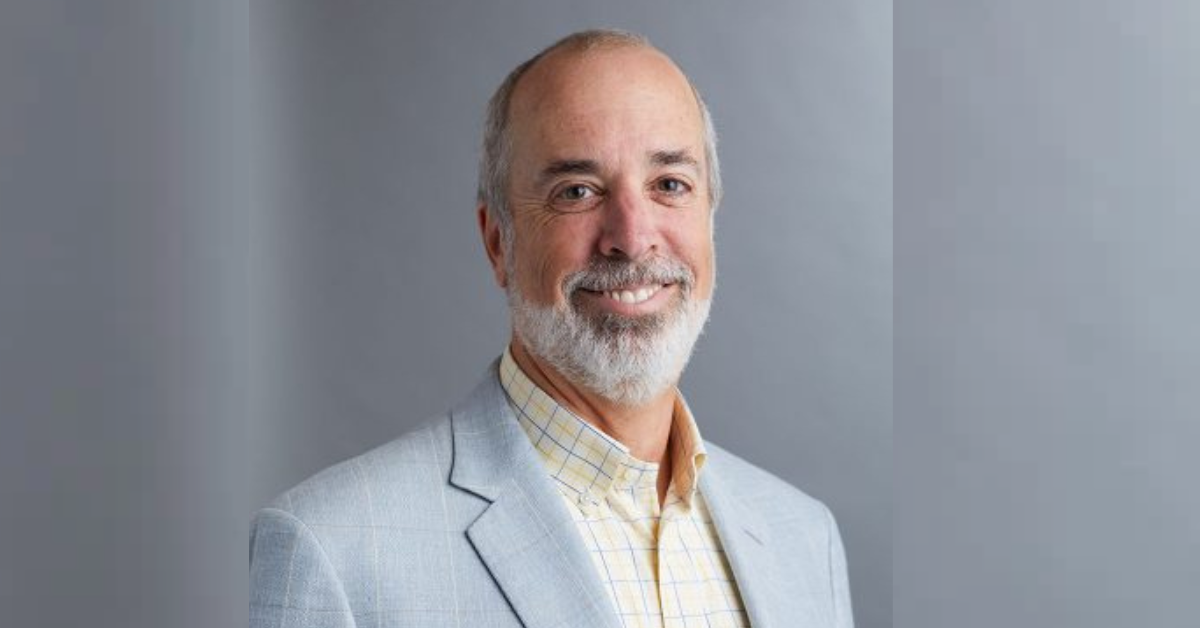
Guest: Ric Edelman, one of the most accomplished financial advisors in history. Ric has been ranked the number one independent financial advisor in the nation by Barron’s three times and was inducted into the Barron’s Hall of Fame. His firm, Edelman Financial Engines, was ranked the number one RIA in the country four times by Barron’s and named the number one investment company in America by Consumer Reports.
Rick is also a multiple New York Times bestselling author, an award-winning radio and television host, a university lecturer, a patent holder, an ETF creator, and the recipient of three lifetime achievement awards in our industry.
In a nutshell: “This is how we’ve always done it.”
According to Ric Edelman, that’s the most dangerous phrase in financial services.
And advisors who are just doing what they’ve always done are facing a truly dangerous moment. Traditional financial planning playbooks are being torn up by radical health care advances, new digital asset classes, and a complete rethinking of what “retirement” even means as more and more people live to 100. If you’re just focused on improving your firm’s portfolio management relative to market performance, you’re overlooking the human factors that are changing what advisors do and how they do it forever.
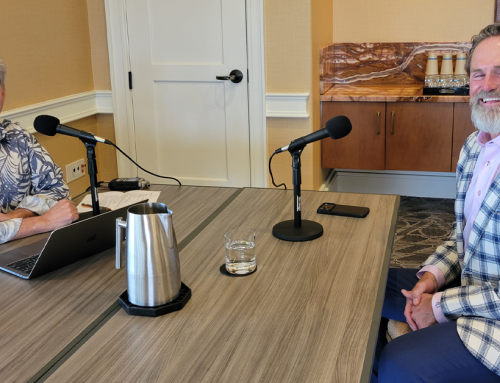
On today’s show, Ric Edelman and I have a wide-ranging conversation about mindset, leadership, curiosity, and what it really means to serve clients in a world that’s changing faster than most advisors are prepared for.
.Ric Edelman and I discuss:
- How working in journalism shaped Ric’s curiosity and inspired his willingness to challenge the status quo.
- How health care advances and longevity trends are replacing the “linear lifeline” with a “cyclical lifeline” of continuous learning and reinvention.
- Is 80/20 the new 60/40?
- Why stable coins are crypto’s “killer app” and why every advisor must get educated on blockchain and wallet-based ecosystems to remain relevant.
- Is sending kids to college the best financial decision for every family?
Ric Edelman on asking questions and developing a disruptor’s mindset:
“ I didn’t ever take a business class or economics class. I was a journalism major: communications, marketing, PR, advertising. And they teach you really only two things in journalism school: how to ask good questions and how to explain the answers in plain English. And what I realized coming out of school is that I had an innate curiosity. Because you’re not really learning any content in journalism, you’re only learning how to communicate and how to absorb information. And so when I got into this business, I began as a journalist in the financial trade press and then made the jump into being an advisor because my wife and I, young newlyweds, we wanted to learn how to buy a house, and the advisor we went to ended up being a crook. We were so unhappy with that experience we said, ‘Let’s teach ourselves how to do this and then teach others what we’ve learned.’ And that was the basis of the formation of our company. And I discovered pretty early on that much of the advice that was traditionally provided by the financial services industry was bad advice. Not nefarious, not evil, not fraudulent, just not in the consumer’s best interest because most of the advice emanated from the product manufacturers and the people selling those products who were trying to earn, back in the 1980s, big commissions. Financial planning was a relatively new phenomenon, and I began by applying my journalism hat of saying, ‘Why is that the advice?’ And the answers I got were insufficient. One of the most common was, ‘Because we’ve always done it this way,’ which is the world’s worst answer to any question you ever pose. And so I started offering advice that was very different from what other people traditionally heard from our industry.”
Ric Edelman on redesigning the retirement glide path:
“We are going to cure, over the next 10 years, cancer, heart disease, respiratory illness, obesity, diabetes, the leading causes of death. And as we do, we are going to be extending our life expectancies. Sure, there’s going to be anomalies and disruptions along the way. But it’s not going to interfere with the fact that we are fundamentally changing longevity, as we’ve been doing for 150 years. Go back a hundred years: tuberculosis, typhoid, cholera were the leading causes of death. Medical science eradicated those and we’re going to eradicate today’s leading causes of death. We’re going to be living longer. You have to assume, as a result, your money is going to have to last a lot longer than you think. That’s why the 60/40 is dead. A 60% allocation that you begin to reduce in your 60s, according to the traditional 60/40 glide path, so that by the time you’re 75 or 80 you have virtually no money in stocks? That’s crazy if you’re going to live to age 100 or beyond. So we need to go from 60/40 to 80/20, and you need to maintain 60%, 70%, 80% equity exposure well into your 70s, 80s, and 90s to offset the impact of taxes and inflation. The same advice you give to a 30 year old and a 40 year old you now need to give to a 60 year old and a 70 year old. That’s my premise. And if you are going to have 80% of your money in equities, you need to include, within that bucket, crypto because it’s the fastest growing with the greatest potential for increase in value over the next decade. ”
Ric Edelman on the advisor’s true role in college planning:
“One of the biggest worries parents have, our clients have, is college because we know how expensive college is. The problem is that we tend to focus as advisors on helping our clients save for college. ‘I’ll resolve your fears by helping you with a 529 or a Roth or some other clever strategy to cover the cost.’ That’s not the only issue that you ought to be focusing on. The real issue is, should your clients’ teens go to college in the first place? 24% of college freshmen drop out. Only 62% graduate after six years. 10 years after graduating, half of college grads are working in fields that need a degree. The other half aren’t. 20 years out, 42% are still paying off their student loan debt. We are ruining their lives by sending them to college. Over 75% of college students report that because of their student loan debt, they delayed buying a car, buying a house, getting married, and having children. And college students today know all this, and that’s why 51% of them have been diagnosed with depression. 24,000 college kids last year tried to commit suicide, and 1,100 of them succeeded. We are sending too many kids to college who aren’t ready to be there, and that’s why they’re dropping out. It’s why they’re depressed. We need to help our clients figure out, with their children, is college in fact the right choice right now? And if so, how can we create a strategy that will ensure your college success, that you’ll graduate in four years, debt-free, on the dean’s list, ready to enter your field? That’s what The Truth About College deals with. I don’t talk about investments. I talk about the whole premise. How do you make the college experience successful so the child has a prosperous, happy life, and so that college doesn’t ruin their life?”