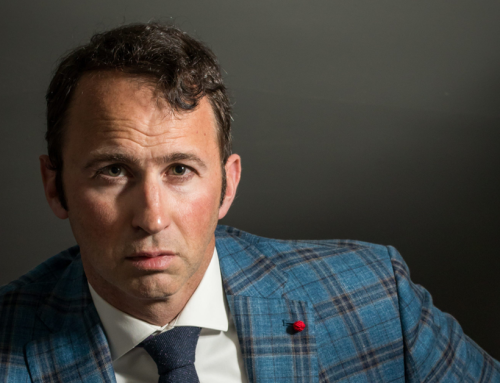

Guest: Sam Kang, head of Schwab Family Office, which is an exclusive, invitation-only offering designed specifically to support single-family offices and multi-family offices serving ultra-high-net-worth families.
In a nutshell: Managing ultra-high-net-worth families today requires far more than great investment performance or the latest in tech. Advising the 1% requires the ability to simplify complexity, align generations, and become the trusted “first call” for every major decision a family faces. And retaining the family’s business through a generational wealth change requires a deft touch with family dynamics and an understanding of the deeper meaning of legacy.
On today’s show, Sam Kang explores how leading firms are evolving into true financial hubs for their wealthiest clients and using a broader variety of services to facilitate long-term continuity for both the firm and the families they serve.
.Sam Kang and I discuss:
- What sets apart single-family offices and multi-family offices and where the “aspirational” multi-family office fits in.
- The 10 domains of family office services, split between quantitative, qualitative, and administrative needs.
- Why 70% of wealth transfers fail by the second generation and how advisors can help families secure their legacies.
- The concept of a “family constitution” and its role in preserving family values.
- How MFO pricing models are shifting from pure AUM to hybrid structures.
- The role of technology and AI in scaling family office services.
- Why the most successful firms of the future will be defined by trust and relevance, not just growth.
Sam Kang on the growth of MFOs and high-net-worth advising:
“ There are MFOs that are specifically geared toward the space, what I call more of the ‘specialist services.’ They’ve built the capabilities that are required to support the complexity of the multi-family office. There are then other firms that have grown tremendously, but they are more generalists. They provide services for the mass affluent, the high-net-worth, ultra-high-net-worth, and they’ve been able to then segment the business and create capabilities and services specifically for that space. So there are firms that we support that have that more bifurcated segmented model. Then there are just advisors that have ultra-high-net-worth clients. They are aspirational MFOs, but they may have 10-15 clients that are ultra-high-net-worth. But the majority of their book of business is not necessarily ultra-high-net-worth. We still look to support those offerings. We’re actually seeing a tremendous growth in that space also. So we’re working on a specific offering for those RIAs that have those specific needs also.”
Sam Kang on the fragility of generational wealth:
“There is an old adage, ‘Shirt sleeves to short sleeves within three generations.’ What we’ve seen is that for 70% of families the wealth transfer does not succeed past that second generation. By the third generation, only 13% survive; by the fourth generation only 3%. So there absolutely is a huge need to create a more holistic family plan. This is where an RIA really does need to focus on making sure you build those relationships with the entire family. Because we’ve also seen some stats where adult children of advisors, more than 70%, say they would fire their parents’ advisor because they just don’t have that relationship.”
Sam Kang on the future of MFOs:
“The most successful multifamily offices of the future will be the firms that put their clients first. It is not just going to be about growth. They are going to really build those relationships with those family offices and think about that second and third generation, and really build the overall capabilities to support those families. If it is just about growth and expansion, I do think that you will lose a relationship. Especially with these families, that relationship is critical. That trust is critical.”