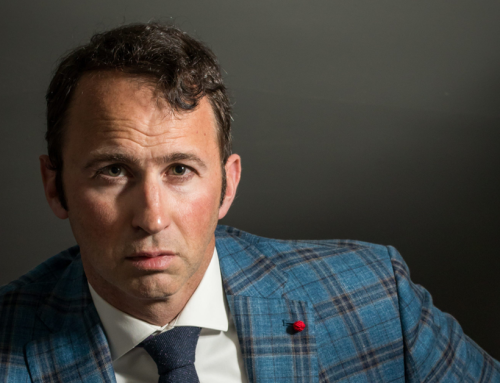

Guest: Seth Levine, co-founder and Managing Director of Foundry, one of the country’s leading venture capital firms with approximately $4 billion in assets under management. Seth is also the co-author (with Elizabeth MacBride) of the new book Capital Evolution: The New American Economy.
In a nutshell: We are living through a moment when the very idea of capitalism is being questioned, challenged, and redefined. The old Milton Friedman model, optimized for shareholder profits, is cracking under the weight of modern economic and social pressures. Can the U.S. and the rest of the world transition towards a more sustainable system that prioritizes stakeholders, balance, and resilience?
On today’s show, Seth Levine unpacks his concept of “Dynamic Capitalism.” We also discuss how business leaders can distinguish between corporate values and toxic politics and why creating more owners may be the most important economic idea of the next decade.
.Seth Levine and I discuss:
- Why the “Chicago School” of shareholder focus is no longer sustainable and how to navigate the messy middle as capitalism transitions to a new phase.
- Lessons on employee ownership from Pete Stavros and KKR.
- Did CEOs wade too far into political battles? And what is the role of business in driving social change and creating value for all stakeholders?
- The proper balance between government regulation and government support of business.
- What Seth’s 25 years in venture capital have taught him about the value of purpose-driven leadership.
- How CEOs can build organizational resilience and boost long-term value at a company of any size.
Seth Levine on defining “Dynamic Capitalism”:
“Dynamic Capitalism recognizes that shareholder-only capitalism doesn’t work and that it’s created too many unsustainable fissures in our economy and our society. It treats too many things, specifically in the environment, but also the middle class and workers more generally, as resources to be extracted from. If all you care about is profit, that forces you to think about all your inputs to production as things that need to be immediately optimized. Dynamic Capitalism balances short-term and long-term goals and speaks to creating more capitalists, empowering an ownership economy. We want more people to have a stake in our market economy.”
Seth Levine on why companies should promote values, not politics:
“Companies are being asked to speak out about too much. I think that, for the most part, CEOs should stay on the right side of the line of values versus straying into politics. I think it’s asking too much of our companies. And frankly, I don’t want to have a world where companies are judged as being ‘red’ or ‘blue.’ I don’t necessarily need to look to Jamie Dimon to figure out what do I believe about some social incident. I don’t feel like that’s their role. We’re not talking about asking companies to be overtly political and take stances on whatever the political issue of the day is. But we are talking about companies who lead from a sense of values.”
Seth Levine on the importance of creating more owners:
“One of the things that’s happened under shareholder capitalism is we’ve really optimized the labor stream as much as we possibly can. Labor as a category no longer shares in the fruits of the business’ success in the way that they used to. That is not in any way an argument for companies to be less efficient and hire more people than they need to. It is a hundred percent an argument for finding ways to share the prosperity of businesses across the labor force. It’s better for the existing owners, and it’s better for workers as the new owners. ”